
Table of Contents
The Transatlantic Bridge: A UAE to USA Cargo Shipping Guide
Moving goods from the United Arab Emirates to the United States is more than a logistical challenge; it is a journey across hemispheres that connects the world’s most efficient logistics hub with its largest consumer market. For businesses in Dubai or Abu Dhabi, the U.S. represents a land of immense opportunity, but one guarded by stringent regulations and vast geographical distances.
In 2026, shipping from the UAE to the USA has been transformed by digital “green lanes” and real-time data integration. Whether you are exporting high-end furniture, industrial machinery, or e-commerce inventory, understanding the nuances of this specific trade lane is essential for maintaining your bottom line and your brand’s reputation.

Why the UAE-USA Route is a Maritime Masterpiece
The maritime connection between the UAE and the USA is a testament to the scale of global trade. This route is special not just for the volume it carries, but for the sophistication of the infrastructure supporting it.
The Prestige of the Ports
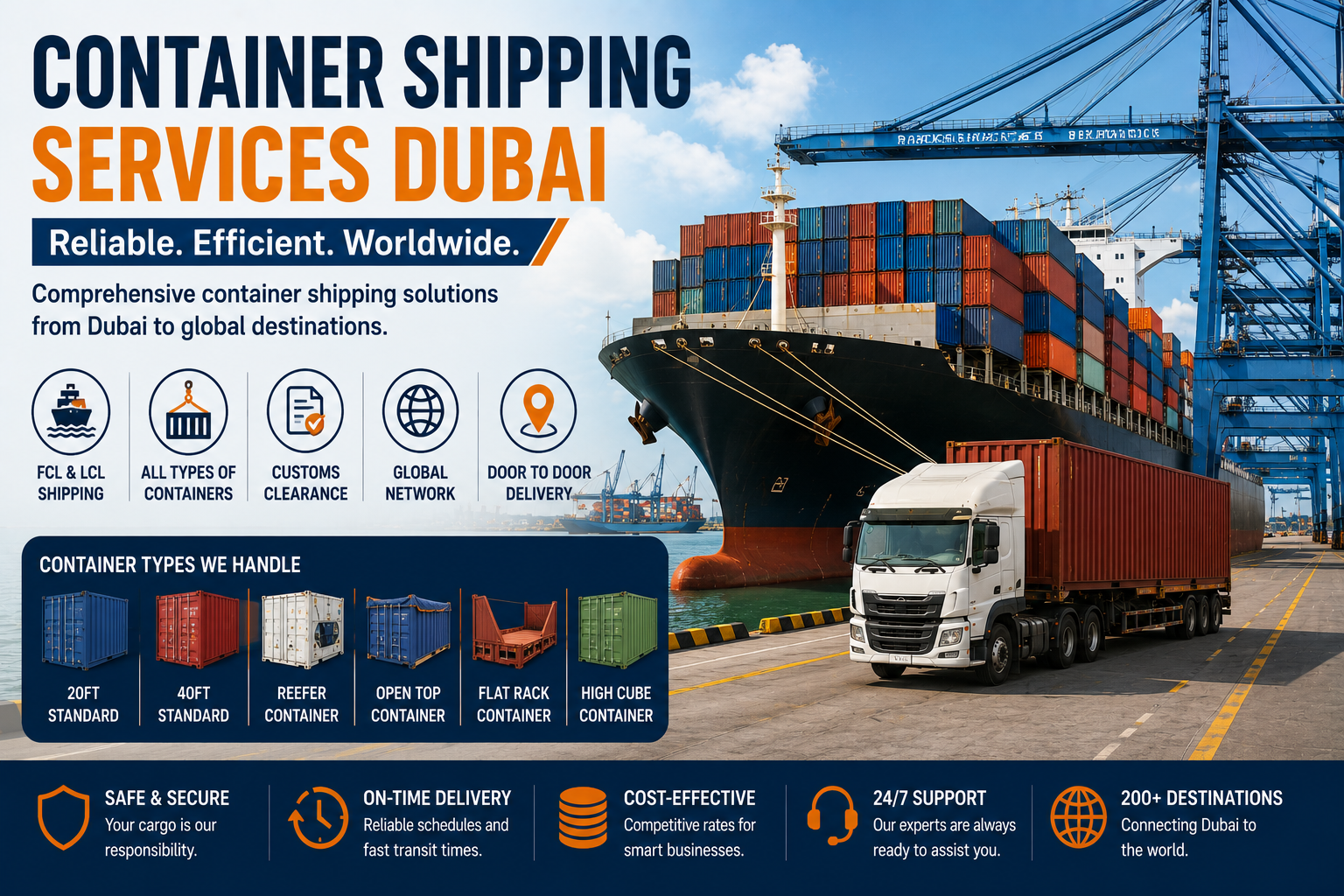
Dubai’s Jebel Ali Port serves as the primary gateway. Its scenery is one of sheer industrial power—massive automated cranes working in a choreographed dance to load vessels that will spend weeks at sea. On the receiving end, ports like New York/New Jersey, Savannah, and Long Beach offer state-of-the-art intermodal connections that carry UAE cargo into the American heartland.
A Culture of Excellence
The “marine culture” on this route is defined by the C-TPAT (Customs-Trade Partnership Against Terrorism) standards. This partnership ensures that cargo moving from the high-security terminals of the UAE receives expedited processing upon arrival in the U.S., reflecting a mutual commitment to safety and efficiency.
When to Ship: Timing Your Transatlantic Logistics
Unlike regional shipping, the UAE to USA route is heavily influenced by global retail cycles and weather patterns in both the Atlantic and Indian Oceans.
- The Summer Window (May – July): This is often the most stable time for shipping. Sea conditions are generally favorable, and you avoid the “Peak Season Surcharge” (PSS) that typically kicks in during the late Q3 rush for the American holiday season.
- The “Golden Week” Ripple (October): While “Golden Week” is a Chinese holiday, its impact on global vessel capacity is felt in the UAE. Space can become tight as carriers re-align their global loops.
- The Winter Challenge: Shipments to the U.S. East Coast during January and February must account for North Atlantic winter storms, which can occasionally add 3–5 days to transit times due to “slow steaming” or port closures in the U.S.
Recommended Experiences: Choosing Your Shipping “Itinerary”
In logistics, your “itinerary” is your choice of freight mode. Each has a specific impact on cost and speed.
1. Sea Freight: The Full-Scale Solution
- FCL (Full Container Load): Your goods have the container to themselves. This is the “First Class” of sea travel, offering the highest security and the fastest sea transit times to ports like Savannah or Houston.
- LCL (Less than Container Load): Perfect for small businesses or startups. Your cargo shares space with others. It’s the “Economy Plus” of shipping—cost-effective but requiring a few extra days for consolidation and deconsolidation.
2. Air Freight: The Fast Track
When “time is money,” air freight from DXB or DWC to major U.S. hubs like JFK, ORD, or LAX is the answer. For high-value tech, fashion, or urgent industrial parts, the 3–5 day transit time justifies the premium cost.
Local Logistics: Weather, Sea Conditions, and Routing
The Routing Reality
Cargo from the UAE to the USA typically follows one of two paths:
- The Suez Canal Route: The primary path to the U.S. East Coast (New York, Savannah).
- The Trans-Pacific Route: Often used for U.S. West Coast destinations (Los Angeles, Seattle), with a transshipment stop in major Asian hubs like Singapore or Busan.
Sea Conditions
The journey involves crossing the Arabian Sea and the Atlantic. Modern “Mega-Max” vessels are designed to handle these waters with ease, but savvy strategists always ensure their cargo is “Seaworthy” packed to withstand the natural pitch and roll of a 30-day voyage.
Safety & Local Regulations: Navigating US Customs
The United States is one of the most regulated import markets in the world. Success depends on “Pre-Compliance.”
The ISF (10+2) Requirement
For sea freight, the Importer Security Filing (ISF) must be submitted at least 24 hours before the cargo is loaded onto the ship in the UAE. Failure to do this results in an automatic $5,000 fine from U.S. Customs and Border Protection (CBP).
Ultimate Consignee and Customs Bonds
To ship to the USA, you must have a Customs Bond (either Single Entry or Continuous). This acts as a guarantee to the U.S. government that all duties and taxes will be paid. A professional freight forwarder in Dubai will coordinate with a U.S. Customs Broker to ensure this is in place.
Pricing Guidance: Cost Expectations for 2026
Shipping to the USA is an investment. Prices fluctuate based on the “General Rate Increase” (GRI) imposed by shipping lines.
- 20ft Container (FCL): Expect rates between $3,500 – $5,000 depending on the U.S. port of entry.
- 40ft Container (FCL): Generally ranges from $5,000 – $7,500.
- Air Freight: Rates typically hover between $4.50 – $7.00 per kg, influenced by fuel prices and aircraft belly capacity.
Pro-Tip: “All-in” rates from Dubai should include the AMS (Automatic Manifest System) fee and the ISF filing fee. Always verify if your quote includes “On-Carriage” (trucking from the U.S. port to your warehouse).
Frequently Asked Questions (FAQs)
1. How long does it take to ship from Dubai to the USA? Sea freight to the East Coast takes 30–35 days. To the West Coast, it can take 35–45 days. Air freight takes 3–7 days including customs.
2. What is the most important document for US shipping? The Bill of Lading (BOL) is the title to your goods, but for the US, the Commercial Invoice must be extremely detailed, listing the country of origin and the HTS (Harmonized Tariff Schedule) code.
3. Do I need a US-based company to ship to the USA? No. You can ship as a “Foreign Unregistered Importer,” but you will still need a US Customs Bond and a designated agent for service of process.
4. Can I ship furniture from the UAE to my new home in the USA? Yes, this is common for expats. Personal effects can often enter duty-free if you have owned them for more than one year, but you still need to file a Form 3299 (Declaration for Free Entry of Unaccompanied Articles).
5. What are ‘Anti-Dumping’ duties? The US imposes extra taxes on certain goods if they believe they are being sold below market value. Check if your specific product (e.g., certain steel or aluminum products) is subject to these before shipping.
6. Is Jebel Ali the only port used for US exports? While it is the largest, Abu Dhabi’s Khalifa Port also offers direct sailings to the US, particularly through the COSCO and MSC networks.
7. How much is insurance for UAE to USA cargo? Typically 0.5% to 1.5% of the declared value. Given the distance and number of times the container is handled, insurance is highly recommended.
8. What is a ‘Continuous Bond’? If you plan to ship more than three times a year to the USA, a Continuous Bond is more cost-effective than buying a Single Entry Bond for every shipment.
Conclusion: A Strategic Partnership
The UAE to USA trade lane is a high-stakes environment where precision pays dividends. By choosing the right “itinerary,” timing your shipments to avoid seasonal surges, and ensuring 100% compliance with U.S. Customs (ISF) filings, you turn a complex transcontinental move into a competitive advantage.
Logistics is not just about moving cargo; it’s about moving information. Ensure your freight partner has the digital tools to keep you informed every nautical mile of the way.
Next Step: Are you ready to calculate your landed cost? I can help you draft a Customs Compliance Checklist specific to your industry to ensure your first shipment to the USA is seamless.


Leave a Comment