
Table of Contents
How Does International Shipping from Dubai Work?
Navigating the Mechanics of Global Trade from Dubai
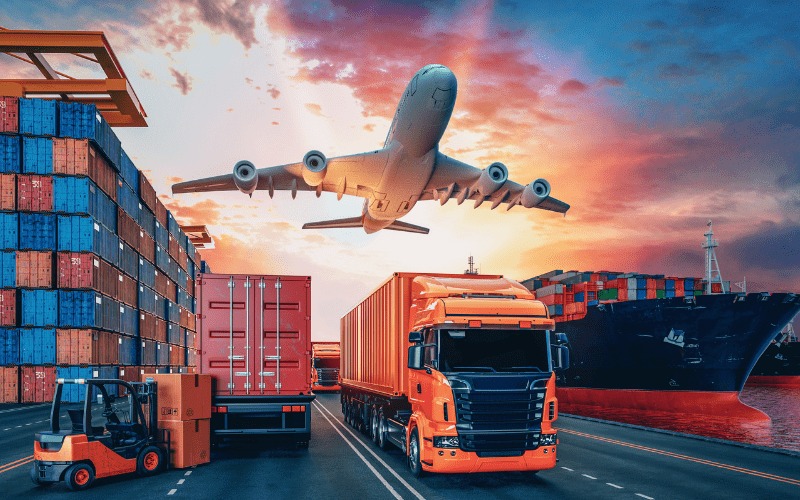
International shipping from Dubai operates as a high-precision ecosystem, leveraging the city’s unique position as the “Gate of the World.” For businesses and individuals, the process is a structured journey that transforms a warehouse item into a global commodity. It works through a sophisticated interplay between digital customs platforms, world-class port infrastructure like Jebel Ali, and a network of specialized freight forwarders.
In 2026, the process is more automated than ever. From the moment a shipment is booked, it enters a “bonded” digital corridor that links the UAE’s land, sea, and air routes. Understanding how this works is not just about moving boxes; it’s about navigating international maritime law, UAE export regulations, and the technical requirements of global carriers. Whether you are shipping a single luxury vehicle or a fleet of industrial containers, the workflow remains anchored in compliance, timing, and strategic routing.
This guide breaks down the technical “gears” of the Dubai shipping machine, providing you with the authority to manage your logistics with confidence.
What is International Shipping from Dubai?
Snippet-Ready Definition: International shipping from Dubai is the regulated process of exporting goods from the UAE to global destinations via sea, air, or land. It involves the coordination of carrier bookings, digital customs filing through the Mirsal 2 system, port handling at hubs like Jebel Ali, and international transit managed by licensed freight forwarding specialists.
Why This Matters to Luxury Shippers and Global Businesses
In the realm of high-value trade—such as the movement of superyachts, rare hypercars, or precision medical equipment—the “how” of shipping is as important as the “where.” For the luxury sector, Dubai’s maritime infrastructure offers a level of security and discretion that is rare in global logistics.
- Preservation of Asset Value: Specialized lashing and “white-glove” containerization ensure that environmental factors like humidity and salinity do not degrade the asset.
- Speed to Market: Dubai’s “Sea-to-Air” transition allows cargo arriving by ship to be in the air via Emirates SkyCargo within hours, a critical factor for time-sensitive luxury launches.
- Regulatory Ease: For high-net-worth individuals, the ability to move personal assets under temporary admission (ATA Carnet) without paying steep permanent import duties is a major strategic advantage.
How It Works: The Step-by-Step Lifecycle of a Shipment
International shipping from Dubai follows a five-stage technical lifecycle. Here is the operational breakdown:
- The Booking and Documentation Phase: Everything starts with the “Bill of Lading” (sea) or “Airway Bill” (air). You must provide a Commercial Invoice and a Packing List. In Dubai, your forwarder will use your trade license or passport to generate a unique “S No” (Shipping Bill) via Dubai Trade.
- The Customs Export Declaration: Dubai Customs uses the Mirsal 2 system. Your shipment is declared digitally. If the cargo is standard, clearance is often instantaneous. If it is “restricted” (like certain chemicals or luxury cars), it may undergo a physical inspection at the port gate.
- The “Gate-In” and Port Handling: Your cargo is trucked to Jebel Ali (Sea) or DXB/DWC (Air). At Jebel Ali, it enters one of four terminals. The port’s automated cranes (STS) scan the container and place it in the stack based on its destination and vessel departure time.
- International Transit: The vessel departs. During this phase, the “Master Bill of Lading” is issued by the shipping line. This is your “title” to the goods. In 2026, most carriers provide real-time GPS tracking so you can monitor the vessel’s progress across the Indian Ocean or through the Suez Canal.
- Arrival and Last-Mile Delivery: Once the ship berths at the destination, the local agent handles “De-vanning” (unpacking) and final customs clearance before the goods are delivered to the recipient’s door.

Types of Shipping Variations from Dubai
- FCL (Full Container Load): You rent the entire 20ft or 40ft container. This is the fastest and most secure sea option.
- LCL (Less than Container Load): Your goods share space with others. It is highly cost-effective for smaller volumes but takes longer due to the “consolidation” and “de-consolidation” process.
- RORO (Roll-On/Roll-Off): Specifically for wheeled cargo like cars or trucks. They are driven onto the ship rather than put in containers.
- Breakbulk: For oversized items that don’t fit in containers, such as yacht hulls or industrial turbines.
Advantages of the Dubai Shipping Model
- Multimodal Hub: The “Dubai Logistics Corridor” connects sea and air within a single customs-bonded zone, drastically reducing transit times.
- Digital Sophistication: Dubai’s paperless customs environment minimizes the “human error” that often causes delays in other global ports.
- Global Reach: Jebel Ali is connected to over 140 ports worldwide, ensuring that there is almost always a direct weekly sailing to your destination.
Common Misconceptions and Pitfalls
- Misconception: “Shipping is door-to-door by default.” Unless you book a “DDP” (Delivered Duty Paid) service, you may be responsible for taxes and port fees at the destination. Always check your Incoterms (e.g., EXW, FOB, CIF).
- Pitfall: Neglecting Cargo Insurance. Maritime law (The Hague-Visby Rules) limits a carrier’s liability to a small amount per package. If a ship sinks or a fire occurs, without independent insurance, you could lose 90% of your asset’s value.
- Pitfall: Incorrect HS Codes. Using the wrong Harmonized System (HS) code for your goods can result in immediate fines from Dubai Customs and delays that incur “demurrage” (port storage) fees.
Real-World Strategic Example: The Industrial Pivot
Consider an engineering firm in Dubai that needed to move 50 containers of solar panels to Germany during the Suez Canal congestion.
Instead of waiting for a direct sea slot, they utilized Dubai’s Sea-Air hybrid. They shipped the panels to a regional hub via a fast “feeder” vessel and then flew the remaining leg into Frankfurt. This cost 30% more than sea freight but saved the project from $200,000 in late-delivery penalties. This is the “Dubai Strategy” in action—using flexibility to bypass global bottlenecks.
FAQs
1. How long does international shipping from Dubai take? To Europe, sea freight is 25–35 days; air is 3–5 days. To the USA, sea freight is 35–45 days.
2. What is the Mirsal 2 system? It is the digital platform used by Dubai Customs to process all import and export declarations paperlessly.
3. Do I need a trade license to ship from Dubai? For commercial goods, yes. For personal items or moving your own car, a passport and residency visa (or export certificate) are usually enough.
4. What are ‘Demurrage’ and ‘Detention’ fees? Demurrage is a fee for keeping your container at the port too long. Detention is a fee for keeping the empty container outside the port too long.
5. Can I ship hazardous materials from Dubai? Yes, but they require a Material Safety Data Sheet (MSDS) and specialized “Dangerous Goods” (DG) handling.
6. What is an ‘ATA Carnet’? It is a “merchandise passport” that allows you to ship goods (like luxury cars for an event) temporarily without paying duties, provided they return to Dubai.
7. How are shipping costs calculated? By weight (Air) or by volume/container size (Sea), plus surcharges for fuel and port handling.
8. What is the role of a freight forwarder? They act as your “travel agent” for cargo, coordinating the trucks, ships, and customs so you only have one point of contact.
Conclusion: Mastering the Flow of Trade
International shipping from Dubai is a masterclass in modern logistics. By understanding the interplay between documentation, digital clearance, and port operations, you can navigate the global market with the same efficiency that has made Dubai a world-leading hub. The key to success is not just moving the cargo, but moving the information correctly before the cargo even leaves the warehouse.

Leave a Comment