
Table of Contents
Navigating the Gateway of Global Trade: Dubai for SMEs
Dubai has long transcended its status as a regional hub to become the central nervous system of global maritime and aerial trade. For small business owners, the prospect of tapping into import export services in Dubai is both exhilarating and daunting. The city offers a unique “triple-threat” advantage: world-class infrastructure at Jebel Ali Port, the massive logistics corridor of Dubai World Central (DWC), and a regulatory environment designed to foster entrepreneurial speed.
However, for a small business, the barrier to entry isn’t just capital—it is the mastery of complex logistics. In 2026, the landscape has shifted toward digital-first customs and sustainable shipping routes. Succeeding in this environment requires more than just a product; it requires a strategic partnership with logistics experts who understand how to navigate the “last mile” as effectively as the “first ocean mile.” This guide serves as a practical blueprint for SMEs looking to leverage Dubai’s trade ecosystem to scale globally.
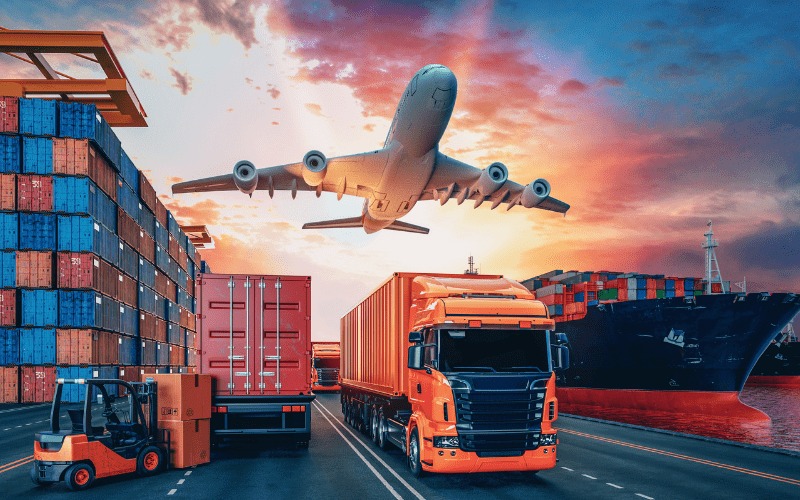
What are Import Export Services in Dubai for Small Businesses?
Import export services in Dubai for small businesses are specialized logistics solutions that facilitate the movement of goods across international borders. These services include freight forwarding, customs brokerage, warehousing within free zones, and regulatory compliance assistance (such as HS Code classification), specifically tailored to handle the lower volumes and budget constraints typical of SMEs.
Why This Matters to High-Growth Businesses and Entrepreneurs
In the world of international trade, Dubai acts as a “logistics trampoline.” For a small business, the right import-export strategy is the difference between a healthy margin and a sunken cost. Dubai’s strategic location—situated between the manufacturing giants of Asia and the consumer markets of Europe and Africa—allows SMEs to use the city as a re-export hub.
By utilizing import export services in Dubai, small businesses can minimize transit times and take advantage of tax-neutral environments like the Dubai Multi Commodities Centre (DMCC) or Jebel Ali Free Zone (JAFZA). For businesses dealing in high-value goods, electronics, or luxury items, the security and speed of Dubai’s logistics chain are not just conveniences—they are competitive necessities.
How It Works: The SME Trade Lifecycle in Dubai
Navigating the trade process in the UAE involves a specific sequence of regulatory and logistical steps.
1. Business Licensing and E-Mirsal Registration
Before moving cargo, a business must have a valid UAE trade license. For importers, registering with Dubai Customs through the “Dubai Trade” portal is essential. You will receive a unique Customs Code, which is the “passport” for your goods.
2. Sourcing and Freight Mode Selection
Small businesses must decide between Sea Freight (Cost-effective for bulk) or Air Freight (Speed-critical). Many SMEs now opt for “Sea-Air” multimodal solutions—discharging at Jebel Ali and flying out of Al Maktoum International—to balance cost and speed.
3. Documentation and HS Code Classification
Every product must be assigned a Harmonized System (HS) Code. Incorrect classification is the leading cause of customs delays and fines. Professional import-export services verify your Proforma Invoices, Packing Lists, and Certificates of Origin.
4. Customs Clearance and Duty Payment
Upon arrival, goods undergo inspection. Dubai generally applies a 5% customs duty on most items, though “Free Zone to Free Zone” transfers or goods destined for re-export may be exempt or eligible for duty suspension.
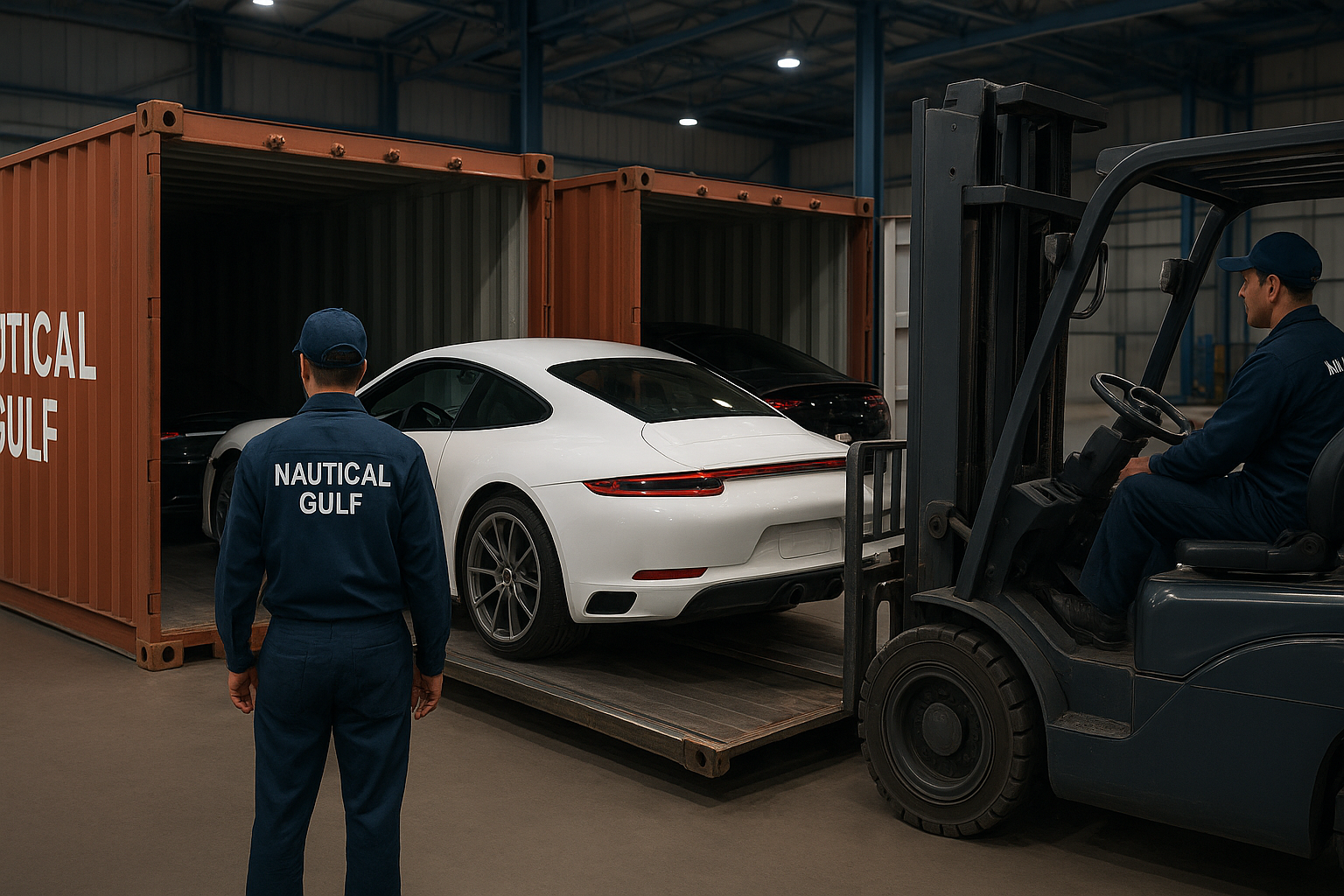
Key Variations of Logistics Services
1. Freight Forwarding (The Architect)
Freight forwarders act as the “travel agents” for your cargo. For small businesses, they offer LCL (Less than Container Load) services, allowing you to pay only for the space you use by sharing a container with other shippers.
2. Customs Brokerage (The Navigator)
These specialists focus purely on the legalities. They ensure that your “Bill of Entry” is filed correctly and that you comply with “Restricted Goods” regulations (e.g., permits from the Ministry of Industry and Advanced Technology).
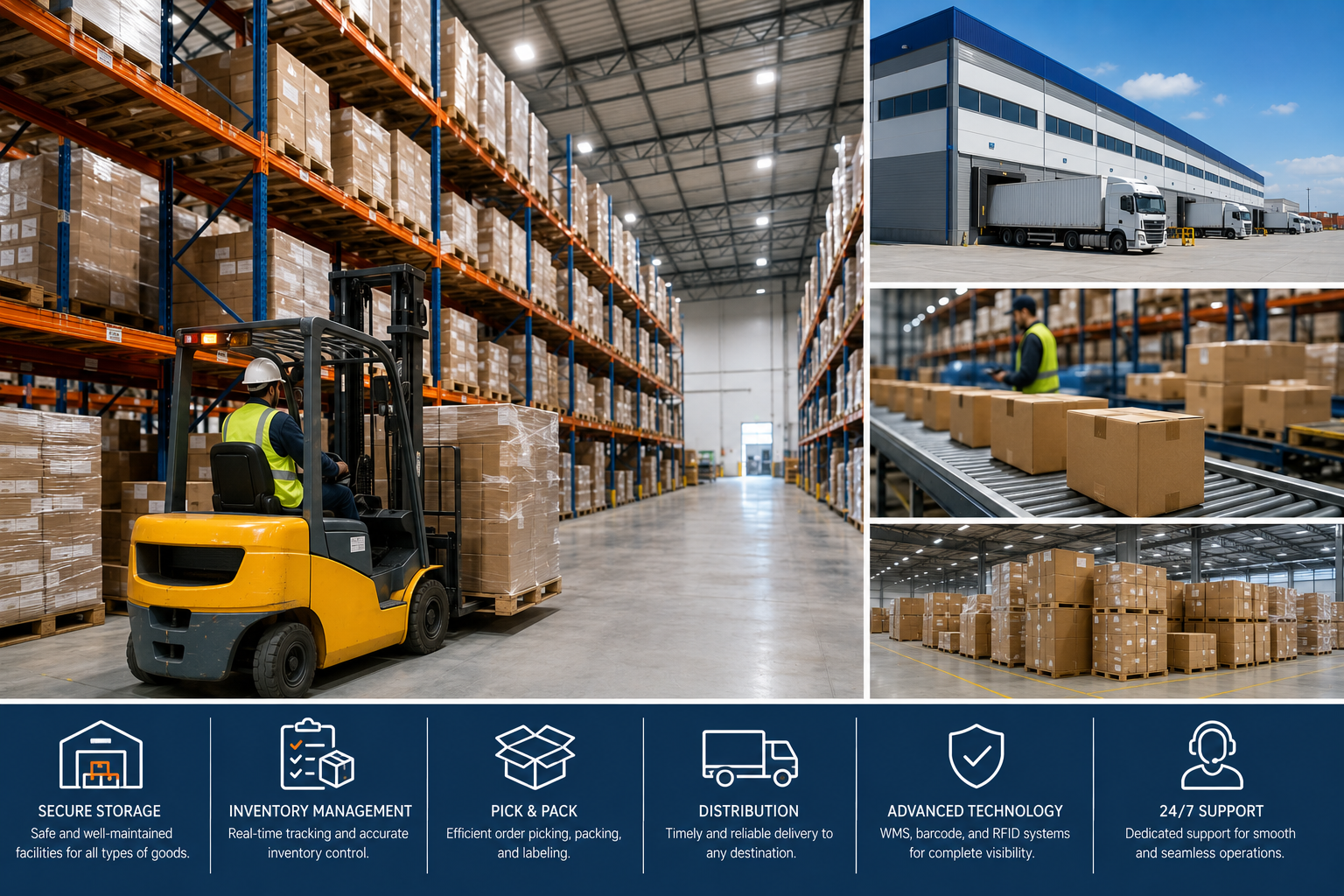
3. Third-Party Logistics (3PL) and Warehousing
For SMEs without a physical warehouse, 3PL providers in Dubai South or JAFZA offer “pick and pack” services, temperature-controlled storage, and inventory management.
Advantages of Using Professional Services in Dubai
Small businesses often attempt to “DIY” their logistics to save costs, but professional import export services in Dubai offer strategic value that outweighs their fees:
- Lower Shipping Rates: Logistics firms aggregate volume from hundreds of SMEs, allowing them to pass on “wholesale” shipping rates from carriers like Maersk or DP World.
- Risk Mitigation: Logistics experts provide cargo insurance and help navigate the “Red Sea” or “Strait of Hormuz” maritime advisories, ensuring your supply chain remains resilient.
- Compliance Accuracy: They stay updated on the latest UAE “Economic Substance Regulations” (ESR) and VAT requirements, preventing legal bottlenecks.
Common Misconceptions and Pitfalls
Myth 1: “Free Zones Mean No Rules.”
While Free Zones offer 100% ownership and tax benefits, they still require rigorous reporting. You cannot move goods from a Free Zone into the UAE “Mainland” without paying customs duties and having a local distributor.
Myth 2: “Sea Freight is Always Cheaper.”
For small, high-value shipments (like luxury watches or specialized tech), the “carrying cost” of sea freight (30+ days) can be more expensive than air freight when you factor in tied-up capital and warehouse insurance.
Pitfall: Neglecting Incoterms
Many small businesses sign contracts without understanding Incoterms (e.g., EXW, FOB, CIF). This leads to unexpected costs at the Dubai port, such as terminal handling charges or “demurrage” (storage fees for uncollected cargo).
Real-World Logistics Insights
Scenario A: The E-commerce Pivot
A small boutique in Dubai started importing organic textiles from India. Initially, they struggled with high shipping costs. By switching to an LCL (Less than Container Load) service through a Dubai-based freight forwarder, they reduced their logistics spend by 40%, allowing them to price their products competitively for the UAE mainland market.
Scenario B: The Re-export Strategy
A tech startup used Dubai as a “Middle East Hub.” They imported components from Taiwan into the Dubai Airport Freezone (DAFZA), assembled them, and re-exported them to Saudi Arabia. Because the goods stayed within “Customs Bonded” areas, they avoided the 5% import duty entirely, significantly boosting their profit margins.
Frequently Asked Questions (FAQs)
1. Can a small business import goods into Dubai without a local office? Generally, you need a UAE trade license to be the “Importer of Record.” However, small businesses can use “Trading Houses” or “General Trading” companies in Dubai to act as their local agents.
2. What is the minimum shipment size for import-export services? There is no “minimum.” Through LCL (Less than Container Load) or air courier services, you can ship as little as 1kg or a single pallet.
3. How much is the customs duty in Dubai? The standard rate is 5% of the CIF (Cost, Insurance, and Freight) value. Some items like alcohol and tobacco have higher rates, while many “essential” items are 0%.
4. What documents are mandatory for importing to Dubai? You need a Commercial Invoice, Packing List, Bill of Lading (for sea) or Airway Bill, and a Certificate of Origin.
5. How long does customs clearance take in Dubai? With the “Pre-Arrival Clearance” system, goods are often cleared within 24 to 48 hours, provided the documentation is flawless.
6. Do small businesses need to pay VAT on imports? Yes, a 5% VAT is applicable on imports. However, VAT-registered businesses can often “reverse charge” this on their tax returns, aiding cash flow.
7. What are “Demurrage” charges? These are penalties charged by the shipping line if you fail to collect your container from the port within the “free days” (usually 5-7 days).
8. Can I import “Restricted Items” like cosmetics or food? Yes, but they require prior approval from the Dubai Municipality (Montaji system) or the Ministry of Health.

Conclusion: Mastering the Flow of Commerce
In the rapid-fire world of Dubai trade, logistics is the silent engine of growth. For small businesses, import export services in Dubai are not just a utility—they are a strategic asset. By understanding the nuances of customs codes, free zone advantages, and freight consolidation, SMEs can compete on a global stage with the efficiency of a multinational corporation.
Success in Dubai’s maritime and aerial corridors comes down to preparation. When you treat your supply chain as a cornerstone of your brand rather than an afterthought, you unlock the true potential of the “Gateway to the World.”
Ready to streamline your Dubai trade operations for 2026? Reach out for a comprehensive logistics audit and freight strategy tailored to your business scale.

Leave a Comment