

Table of Contents
Why cargo gets delayed in Dubai customs
Dubai is globally recognized for having one of the most technologically advanced customs systems in existence. With the integration of AI-driven risk engines and the Mirsal II platform, most shipments clear within minutes. However, for a business owner or a logistics manager, there is nothing more frustrating than seeing a “Held for Inspection” or “Pending Documentation” status on a tracking portal.
The reality of 2026 is that while the systems are fast, the regulatory scrutiny is higher than ever. Why does cargo get delayed in Dubai customs? It is rarely a system failure. Instead, delays are usually the result of “Data Friction”—discrepancies between the digital declaration and the physical reality of the goods. Whether it is an overlooked permit for a luxury yacht component or a minor error in a Harmonized System (HS) code, the result is the same: storage fees at Jebel Ali or DWC.
As a maritime strategist, I see these delays not as random events, but as preventable logistical hurdles. Understanding the “Why” is the first step toward building a frictionless supply chain. In this guide, we will break down the technical reasons behind customs holds and provide practical strategies to ensure your cargo moves at the speed of Dubai trade.

What is a Dubai Customs Delay?
A Dubai Customs delay refers to a temporary halt in the clearance process of goods at a port or airport entry point. These delays typically occur due to discrepancies in documentation (Invoice, Packing List), incorrect HS Code classification, lack of mandatory permits from regulating bodies (like MOIAT or MOHAP), or a flag from the risk management system necessitating a physical inspection (X-ray or manual) to verify the cargo’s value and legality.
Why Customs Speed Matters to Luxury Travelers and Yacht Owners
In the world of high-value leisure and luxury travel, time is the ultimate currency. If a superyacht berthed at Port Rashid or Dubai Harbour is waiting for a critical propulsion spare from Europe, a customs delay of 72 hours can ruin an entire charter itinerary.
For luxury travelers shipping personal vehicles or bespoke interior fittings, a delay doesn’t just mean a late package; it means “Demeurrage” (port storage) costs that can scale into thousands of dirhams per day. The ability to navigate Dubai Customs isn’t just about compliance—it’s about preserving the luxury experience of seamless global mobility.
How it Works: The Path to a Customs Hold
Understanding the “Clearance Flow” helps pinpoint where things go wrong. Here is the technical sequence of a Dubai Customs declaration:
- Submission (Mirsal II): Your agent submits the Bill of Entry via the digital portal.
- Risk Engine Analysis: An AI-driven system checks the importer’s history, the HS codes, and the country of origin.
- Automatic Clearance (Green Channel): If everything aligns, the “Duty Paid” certificate is issued instantly.
- Documentary Review (Yellow Channel): An officer pauses the file to verify the valuation or a specific permit.
- Physical Inspection (Red Channel): The container is moved to an inspection bay for X-ray or manual verification.
Common Reasons Why Cargo Gets Delayed
1. HS Code Misclassification
The Harmonized System (HS) is the universal language of trade. If you classify a “Technical Marine Sensor” under a generic “Electronics” code, the system may flag it for a higher duty rate or a missing permit.
2. Missing “Restricted Goods” Permits
Many goods require approval from specific UAE ministries. For example:
- Telecommunications: Require TDRA approval.
- Medical/Cosmetic: Require Ministry of Health (MOHAP) approval.
- Industrial/Chemical: Require Ministry of Industry and Advanced Technology (MOIAT) permits.
3. Valuation Discrepancies
Dubai Customs maintains an extensive database of global commodity prices. If your commercial invoice shows a price significantly lower than the “Market Value,” the system will trigger a hold to prevent under-invoicing and duty evasion.
4. Poor Documentation Clarity
Incomplete packing lists or invoices that lack “Country of Origin” per line item are the most common human errors. If the officer cannot clearly see what is in the box from the paperwork, they will open the box.
Advantages of Using a Professional Logistics Strategist
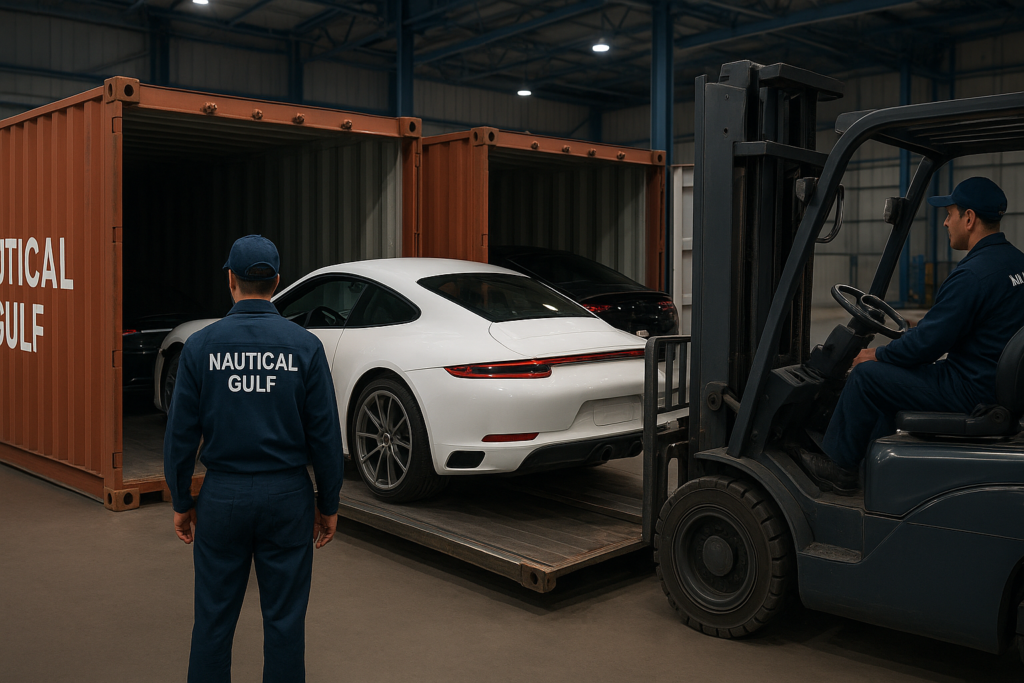
- Pre-Clearance Expertise: Professionals like Nautical Gulf perform “Pre-Audit” checks on documents before the ship even berths.
- Bonded Transport: Utilizing “Customs Bonded” trucks allows goods to move from the port to a free zone warehouse before final clearance, saving on port storage fees.
- Direct Ministry Liaison: Experienced agents have direct digital links to the TDRA and MOIAT to expedite permits.
Common Misconceptions and Pitfalls
“My Freight Forwarder Handles Everything Automatically”
A common pitfall is assuming the forwarder knows your product. If you don’t provide the technical datasheet, they might guess the HS code. Always provide the technical specs.
“Free Zone Cargo Doesn’t Get Inspected”
While Free Zones offer tax advantages, they are not lawless. Dubai Customs still conducts random inspections in JAFZA and DAFZA to ensure no prohibited items are entering the local market.
“If I Pay More, It Goes Faster”
There is no “Bribe” or “Fast Pass” for Dubai Customs. The only way to move faster is to have a “Clean” record as an importer and perfect documentation.
Real-World Case Study: The “Urgent Spare” Story
A yacht captain in Dubai needed a replacement radar unit from the UK. The supplier sent the unit but didn’t include the “TDRA Approval” in the paperwork. The cargo sat in the DWC airport cargo terminal for 5 days, accruing storage fees.
Nautical Gulf stepped in, used the technical serial numbers to apply for a “Personal Use Exemption” through the TDRA portal, and cleared the unit within 4 hours of receiving the correct data. The delay wasn’t caused by customs; it was caused by a lack of a specific permit at the time of filing.
FAQs: Resolving Dubai Customs Delays
1. How long does a standard customs inspection take in Dubai? An X-ray inspection usually takes 24–48 hours. A manual inspection can take 3–5 days depending on port congestion.
2. What are “Demurrage” and “Detention” fees? Demurrage is what you pay to the port for keeping the container there too long. Detention is what you pay to the shipping line for not returning the empty container on time.
3. Can I clear customs myself? Technically, yes, but you must be a registered importer with a Dubai Trade account. Most businesses use a licensed customs broker to avoid errors.
4. Why is my cargo “Held for Valuation”? Customs suspects the price on your invoice is too low. You may need to provide proof of payment (wire transfer) to verify the cost.
5. Does shipping from certain countries cause more delays? High-risk regions or countries with sanctions may trigger more frequent “Red Channel” inspections for security compliance.
6. What is a “Bayan”? “Bayan” is the Arabic term for the Customs Declaration. It is the legal document that describes your goods to the authorities.
7. How can I avoid delays for luxury car shipping? Ensure the engine and chassis numbers on the “Export Certificate” match the vehicle exactly. Any typo here will cause an immediate hold.
8. What happens if my goods are rejected? You will be given the option to “Re-export” the goods to another country or “Destroy” them under customs supervision.
Conclusion: Mastering the Flow
Dubai Customs is a gatekeeper, not a barrier. Delays are almost always a symptom of a mismatch between paperwork and policy. By classifying your goods correctly, securing permits in advance, and working with a strategist who understands the UAE’s regulatory pulse, you can transform customs from a “waiting room” into a “green light.”
In 2026, the best logistics strategy is a proactive one. Don’t wait for the delay to happen—audit your documents today.
Would you like me to conduct a “Document Readiness Audit” for your next shipment to Dubai? Contact Nautical Gulf to ensure your cargo moves without hesitation.

Leave a Comment