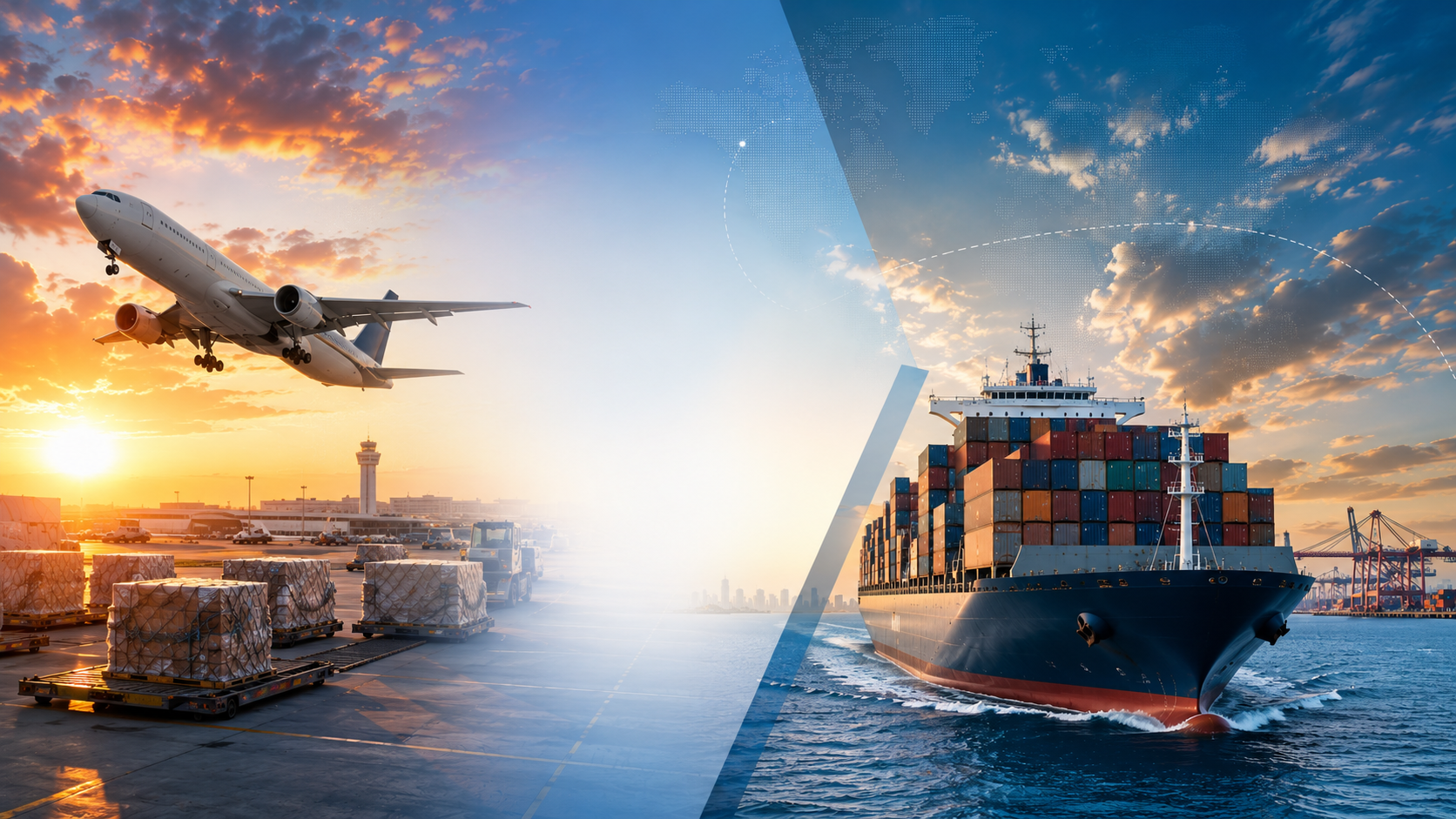

Air Freight vs Sea Freight: Which One Should You Choose?
Air Freight vs Sea Freight: Choosing the right shipping method is one of the most important decisions for businesses involved in international trade. Whether you’re moving commercial goods, machinery, retail products, electronics, automotive parts, or personal cargo, selecting between air freight and sea freight can significantly impact your costs, delivery timelines, and supply chain efficiency.
Both air freight and sea freight play a critical role in global logistics. While air freight offers speed and reliability, sea freight provides cost-effective transportation for larger shipments.
In this guide, we’ll compare air freight and sea freight in detail, helping you determine which option is best suited for your cargo and business goals.
Understanding Air Freight vs Sea Freight
Air freight refers to the transportation of cargo through commercial or dedicated cargo aircraft.
It is commonly used for shipments that require:
- Fast delivery
- High security
- Reduced transit times
- Global reach
Dubai is one of the world’s leading air cargo hubs, connecting businesses to destinations across Africa, Europe, Asia, and North America.
Advantages of Air Freight vs Sea Freight
Fast Delivery
Air freight is significantly faster than sea freight.
Most international shipments can be delivered within:
- 1-3 days regionally
- 3-7 days internationally
High Reliability
Airlines typically operate on fixed schedules, reducing delays and improving predictability.
Better Cargo Security
Airports have strict security procedures, making air freight suitable for:
- Electronics
- Pharmaceuticals
- Luxury products
- High-value goods
Lower Inventory Costs
Faster delivery allows businesses to maintain lower inventory levels and improve cash flow.
Limitations of Air Freight
- Higher transportation costs
- Weight restrictions
- Limited space availability during peak seasons
- Less suitable for bulky cargo
Understanding Sea Freight
Sea freight involves transporting cargo via container ships and ocean vessels.
It is the most widely used shipping method for global trade.
Sea freight is ideal for:
- Large shipments
- Heavy cargo
- Industrial equipment
- Commercial imports
- Bulk products
Dubai’s ports, including Jebel Ali Port, serve as major gateways for international shipping.
Advantages of Air Freight vs Sea Freight
Lower Shipping Costs
Sea freight is considerably cheaper than air freight, especially for large shipments.
Higher Cargo Capacity
Container ships can transport:
- Heavy machinery
- Vehicles
- Construction materials
- Bulk commodities
Flexible Shipping Options
Businesses can choose:
Full Container Load (FCL)
Entire container reserved for one shipment.
Less than Container Load (LCL)
Shared container space with multiple shipments.
Environmentally Efficient
Sea freight generally produces lower carbon emissions per unit transported compared to air freight.
Limitations of Sea Freight
- Longer transit times
- Port congestion risks
- Weather-related delays
- More complex logistics planning
Cost Comparison
One of the biggest differences between air freight and sea freight is cost.
Air Freight vs Sea Freight Costs
Air freight pricing is typically based on:
- Weight
- Volumetric weight
- Destination
- Cargo type
Air freight can cost several times more than sea freight for the same shipment.
Best For
- High-value products
- Urgent cargo
- Small shipments
Sea Freight Costs
Sea freight pricing is influenced by:
- Container size
- Shipment volume
- Route
- Port charges
Sea freight remains the most economical option for:
- Large shipments
- Heavy cargo
- Commercial imports
Best For
- Bulk cargo
- Industrial products
- Long-term inventory planning
Transit Time Comparison
Delivery speed is often the deciding factor when selecting a shipping method.
Air Freight vs Sea Freight Transit Time
Regional Shipments
1-3 Days
International Shipments
3-7 Days
Air freight is ideal when time is critical.
Sea Freight Transit Time
Regional Routes
7-20 Days
International Routes
20-45 Days
Transit times vary depending on:
- Shipping route
- Port operations
- Customs clearance
- Vessel schedules
Best Use Cases
Air Freight vs Sea Freight
Air freight is ideal for:
- Electronics
- Medical equipment
- Pharmaceuticals
- Luxury goods
- Fashion products
- Time-sensitive inventory
Example
A retailer launching a new product line may choose air freight to meet market demand quickly.
Air Freight vs Sea Freight
Sea freight is ideal for:
- Furniture
- Machinery
- Construction materials
- Vehicles
- Industrial equipment
- Bulk commodities
Example
A construction company importing equipment would benefit from sea freight’s lower cost structure.
Air Freight vs Sea Freight Comparison Table
| Factor | Air Freight | Sea Freight |
| Speed | Very Fast | Slower |
| Cost | Higher | Lower |
| Capacity | Limited | Very High |
| Security | High | Moderate |
| Reliability | High | Good |
| Best For | Urgent Cargo | Large Shipments |
| Inventory Flexibility | Excellent | Moderate |
| Environmental Impact | Higher | Lower |
How to Choose the Right Shipping Method
Selecting the best option depends on your business priorities.
Choose Air Freight If:
- Delivery speed is critical
- Cargo value is high
- Shipment size is small
- Inventory turnover is important
Choose Sea Freight If:
- Cost savings are a priority
- Cargo is heavy or bulky
- Delivery deadlines are flexible
- Large quantities are being shipped
Consider a Hybrid Approach
Many businesses combine both methods.
For example:
- Urgent inventory shipped via air freight
- Bulk inventory shipped via sea freight
This approach balances speed and cost efficiency.
Why Work With a Freight Forwarding Partner?
Managing international shipping involves:
- Documentation
- Customs clearance
- Carrier coordination
- Cargo tracking
- Compliance requirements
An experienced freight forwarding company helps streamline the entire process while reducing risks and delays.
Why Choose Nautical Gulf?
Nautical Gulf provides comprehensive logistics and freight forwarding solutions across the UAE and international markets.
Our Services
- Air Freight
- Sea Freight
- Customs Clearance
- Cargo Consolidation
- Warehousing
- Land Transportation
- End-to-End Logistics
Benefits of Working With Us
- Competitive freight rates
- Global logistics network
- Experienced shipping specialists
- Dedicated customer support
- Customized shipping solutions
Our team helps businesses choose the most efficient and cost-effective shipping method for their cargo requirements.
Frequently Asked Questions
- Is air freight always faster than sea freight?
Yes. Air freight generally delivers shipments within days, while sea freight may require several weeks depending on the destination.
- Which shipping method is cheaper?
Sea freight is usually the most cost-effective option for large or heavy shipments.
- Is air freight safer?
Both methods are safe, but air freight often involves fewer handling stages and stricter security procedures.
- Can I ship vehicles using air freight?
While possible, vehicles are usually transported via sea freight because of the significantly lower cost.
- Which method is better for businesses?
The best choice depends on cargo type, budget, urgency, and supply chain requirements.
- Can Nautical Gulf help determine the right shipping method?
Yes. Our logistics experts can assess your cargo and recommend the most efficient solution.
Get Expert Shipping Advice
Not sure whether air freight vs sea freight is right for your shipment?
Nautical Gulf provides expert freight forwarding, cargo management, customs clearance, and logistics solutions tailored to your business needs.
Contact our team today to receive professional shipping advice and a customized freight quotation.
More Related –> Blogs: USA to Dubai


Leave a Comment