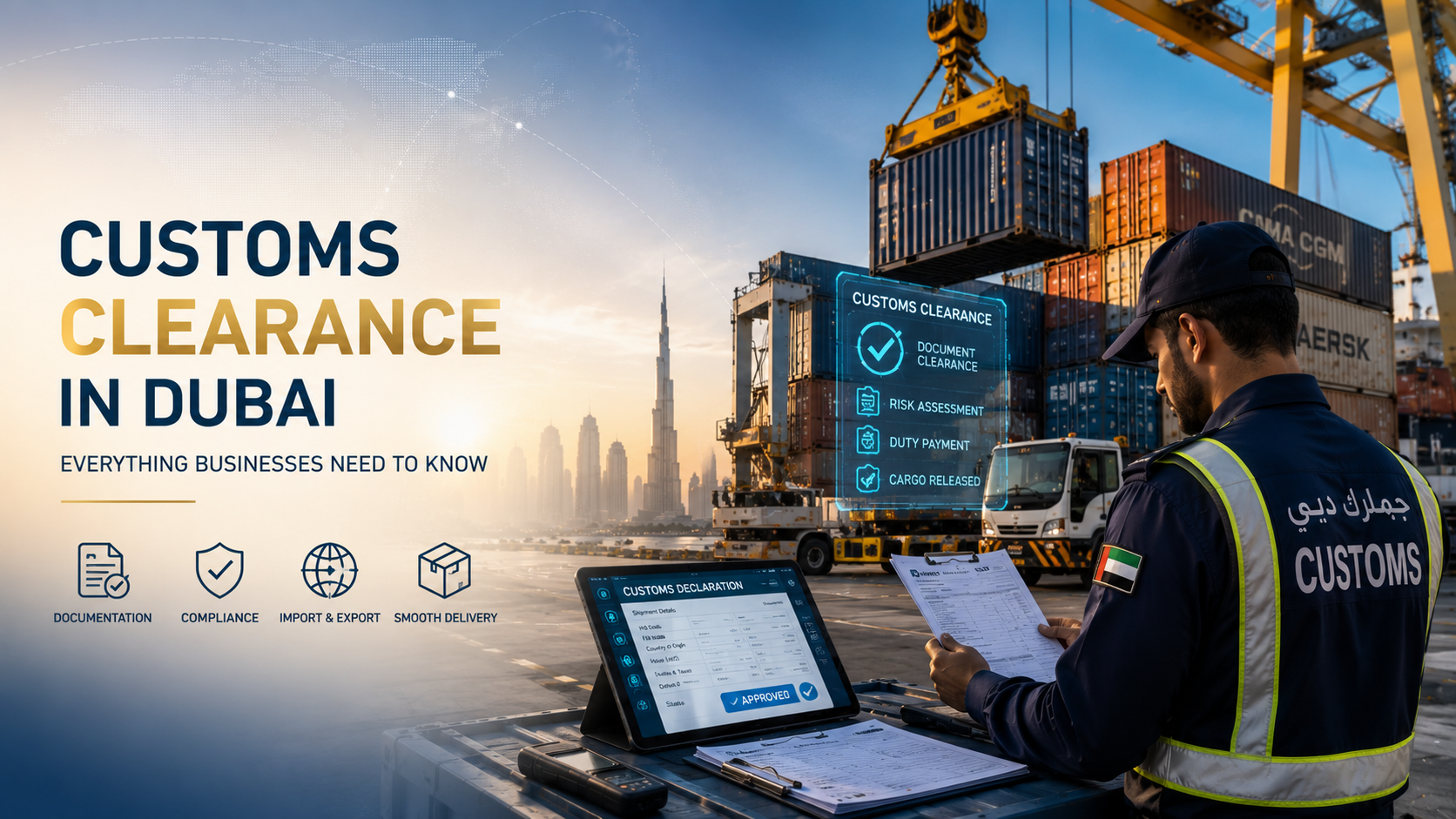

Customs Clearance Dubai: A Complete Business Guide
Customs Clearance Dubai: Dubai is one of the world’s busiest trading hubs, connecting businesses across Asia, Europe, Africa, and North America. Every day, thousands of shipments enter and leave the UAE through airports, seaports, and land borders. Behind every successful shipment is a critical process known as customs clearance.
Whether you’re importing products, exporting goods, shipping machinery, handling commercial cargo, or moving vehicles internationally, understanding customs clearance in Dubai is essential to avoid delays, penalties, and unnecessary costs.
In this guide, we’ll explain how customs clearance works in Dubai, what documents are required, common challenges businesses face, and how to ensure a smooth import-export process.
What is Customs Clearance?
Customs clearance is the process of obtaining approval from customs authorities to import or export goods legally.
The process ensures that:
- Goods comply with UAE regulations
- Duties and taxes are paid
- Restricted items are identified
- Trade laws are followed
- Cargo can be legally released
Without customs clearance, shipments cannot move through ports, airports, or border checkpoints.
For businesses involved in international trade, customs clearance is one of the most important steps in the supply chain.
Why Customs Clearance Matters
A properly managed customs process helps businesses:
- Avoid shipment delays
- Reduce storage charges
- Prevent customs penalties
- Improve supply chain efficiency
- Maintain regulatory compliance
Even small documentation errors can lead to expensive delays and operational disruptions.
How Customs Clearance Works in Dubai
The customs clearance process generally follows these steps:
Step 1: Shipment Arrival
Cargo arrives at:
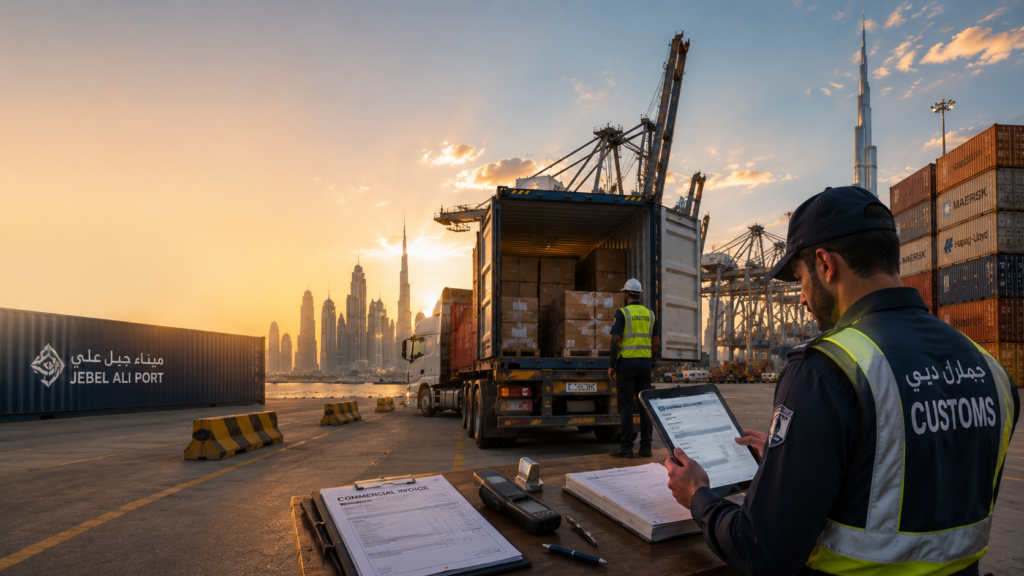
- Jebel Ali Port
- Port Rashid
- Dubai International Airport
- Al Maktoum International Airport
- Land border checkpoints
Step 2: Documentation Submission
Required shipping and commercial documents are submitted to customs authorities.
Step 3: Customs Declaration
The shipment is declared through the customs system.
Information provided includes:
- Cargo description
- Quantity
- Value
- Origin country
- Destination country
Step 4: Inspection (If Required)
Customs officials may inspect cargo physically or electronically.
Not all shipments require inspection.
Step 5: Duty & Tax Assessment
Customs calculates applicable:
- Import duties
- VAT
- Additional fees
Step 6: Payment Processing
Required duties and fees are settled.
Step 7: Cargo Release
Once approved, cargo is released for transportation and delivery.
Required Documents
Accurate documentation is the foundation of successful customs clearance.
The required documents vary depending on the shipment type and industry.
Commercial Invoice
The commercial invoice contains:
- Product details
- Quantity
- Unit value
- Total value
- Seller information
- Buyer information
This document is used for customs valuation.
Packing List
The packing list provides detailed information about:
- Package dimensions
- Weight
- Quantity
- Packaging type
Bill of Lading (Sea Freight)
The Bill of Lading serves as proof of shipment and ownership.
Air Waybill (Air Freight)
For air shipments, an Air Waybill is used instead of a Bill of Lading.
Certificate of Origin
This document identifies the country where goods were manufactured.
It may affect customs duties and trade agreements.
Import Permit
Certain goods require special import permits before entering the UAE.
Examples include:
- Medical products
- Food items
- Chemicals
- Telecommunications equipment
Trade License
Businesses importing or exporting goods often need a valid UAE trade license.
Common Delays in Customs Clearance
Many businesses experience delays because of avoidable mistakes.
Understanding these challenges can help reduce risk.
Incomplete Documentation
Missing or inaccurate paperwork is one of the most common causes of customs delays.
Examples:
- Incorrect invoice values
- Missing signatures
- Incomplete cargo descriptions
Incorrect HS Codes
The Harmonized System (HS) code determines customs classification.
Incorrect codes may lead to:
- Incorrect duty calculations
- Additional inspections
- Customs penalties
Customs Inspections
Some shipments are selected for detailed inspections.
This may increase processing time.
Restricted Goods
Certain products require additional approvals or certifications.
Failure to obtain proper approvals can result in shipment holds.
Outstanding Duties
Unpaid customs duties or taxes can delay cargo release.
Peak Season Congestion
Busy trading periods can affect:
- Port operations
- Cargo handling
- Clearance timelines
Cost Considerations
Businesses should understand all costs associated with customs clearance.
Customs Duty
Import duties vary depending on:
- Product category
- Country of origin
- Product value
VAT
Value Added Tax (VAT) may apply to imported goods according to UAE regulations.
Customs Processing Fees
Administrative charges may apply during customs processing.
Inspection Fees
Additional charges may occur if cargo requires inspection.
Storage Charges
Delayed customs clearance can result in:
- Port storage fees
- Warehouse charges
- Demurrage costs
Documentation Costs
Certain permits, certifications, and approvals may involve additional expenses.
Best Practices for Smooth Customs Clearance
Following proven customs procedures can help businesses avoid delays and reduce costs.
Maintain Accurate Documentation
Always verify:
- Invoice values
- Product descriptions
- Quantities
- HS codes
before shipment dispatch.
Work With Experienced Customs Brokers
Professional customs brokers understand:
- UAE regulations
- Documentation requirements
- Import-export procedures
This reduces the risk of compliance issues.
Verify Product Compliance
Ensure products meet all regulatory requirements before shipping.
Plan Ahead
Avoid last-minute shipments whenever possible.
Proper planning helps:
- Reduce clearance risks
- Improve delivery timelines
- Lower operational costs
Monitor Regulatory Changes
Import and export regulations can change frequently.
Businesses should stay informed about customs updates.
Use Professional Freight Forwarding Services
Freight forwarding companies help coordinate:
- Documentation
- Transportation
- Customs clearance
- Cargo tracking
through a single point of contact.
Why Businesses Choose Nautical Gulf
Nautical Gulf provides comprehensive customs clearance and freight forwarding services across Dubai and the UAE.
Our Services
- Customs Clearance
- Freight Forwarding
- Air Freight
- Sea Freight
- Land Transportation
- Import Documentation
- Export Documentation
- Cargo Handling
Why Work With Us?
- Experienced customs specialists
- Fast document processing
- Regulatory compliance expertise
- End-to-end logistics support
- Competitive pricing
- Dedicated customer support
We help businesses simplify complex customs procedures while ensuring smooth cargo movement.
Frequently Asked Questions
What is customs clearance?
Customs clearance is the process of obtaining approval from customs authorities to legally import or export goods.
How long does customs clearance take in Dubai?
Processing times vary depending on cargo type, documentation accuracy, inspections, and regulatory requirements.
Do I need a customs broker in Dubai?
While not always mandatory, working with an experienced customs broker can significantly reduce delays and compliance risks.
What documents are required for customs clearance?
Common documents include:
- Commercial Invoice
- Packing List
- Bill of Lading
- Certificate of Origin
- Import Permits (where applicable)
What happens if customs documents are incorrect?
Incorrect documentation can result in delays, inspections, penalties, and additional costs.
Can Nautical Gulf handle customs clearance for my shipment?
Yes. Nautical Gulf provides complete customs clearance support for imports and exports across Dubai and the UAE.
Get Customs Clearance Support
Need help with customs clearance in Dubai?
Nautical Gulf offers expert customs brokerage, import-export documentation support, freight forwarding, and end-to-end logistics solutions to help businesses move cargo efficiently and compliantly.
Contact our customs clearance specialists today for professional guidance and a customized logistics solution.

Leave a Comment