

Table of Contents
Digital Freight Platforms in Dubai 2025 — How Marketplaces, AI & Real-Time Tracking Are Rewriting Global Trade
Introduction — the new logistics equation
In 2025, “freight forwarding” no longer means a phone call, a paper bill of lading, and long email threads. It means platforms — digital marketplaces and integrated systems that match shippers to capacity, automate documentation, and deliver real-time visibility across sea, air and land.
Dubai sits at the center of this shift. Its ports, free zones and digital trade initiatives make the city a natural incubator for digital freight platforms that connect Asia, Africa and Europe. For shippers and importers, the promise is simple: faster decisions, lower friction, and measurable outcomes. For countries and ports, the promise is a more resilient and sustainable trade network.
This guide explains exactly what digital freight platforms are, why they matter now (and not later), how they work, how to choose one, and why a Dubai-based partner like Nautical Gulf can be an effective anchor for businesses that need seamless global trade.

1. What is a digital freight platform? (the basics — explained)
A digital freight platform is an online system that brings together the core functions of freight forwarding and logistics into one place: pricing, booking, tracking, documentation, analytics and (often) payment settlement. Think of it as a marketplace + operations center:
- Marketplace layer — matches shippers to carriers (ocean, air, road), finds available space, and dynamically prices slots.
- Operations layer — automates bookings, generates digital documentation (e-B/L, invoices, customs forms), and orchestrates multimodal legs.
- Visibility layer — aggregates telematics, IoT sensor data, and carrier updates into a live dashboard.
- Intelligence layer — uses machine learning to forecast delays, recommend alternate routes, and optimise loading.
Compared with legacy forwarding, platforms eliminate manual handoffs and dramatically reduce lead time and human error.
2. Why Dubai is the natural home for digital freight platforms in 2025
Several structural advantages make Dubai the logical staging ground:
- Strategic geography. Dubai’s location provides short, efficient connections to Africa, Asia and Europe — ideal for platform operators who want high-frequency corridors.
- Port scale & automation. Jebel Ali and Khalifa Port have modern terminals with API integrations and automated handling that platforms can plug into.
- Government and regulatory support. Initiatives such as Trade Single Window and Dubai’s paperless trade policy reduce friction for platform-driven documentation.
- Free zone ecosystems. Logistics and tech companies co-locate in Dubai’s free zones, making partnership and piloting faster.
- Connectivity to emerging markets. Dubai’s role as a re-export hub makes it a pull factor for digital platforms targeting Africa and South Asia growth lanes.
Put simply: Dubai offers the customers, the infrastructure, and the policy environment platforms need to scale fast.
3. Who benefits — and how
Digital freight platforms create measurable value across the ecosystem:
- Shippers (importers/exporters): instant quotes across carriers, better predictability through live ETAs, faster customs clearance via pre-submission of docs.
- Freight forwarders: increased utilisation, reduced manual workload, new revenue from digital services (tracking analytics, insurance).
- Carriers: better capacity fill rates, dynamic route planning, and reduced no-shows.
- Customs & ports: reduced paperwork, improved risk assessment, and shorter dwell times.
- End consumers: faster delivery windows and better tracking detail.
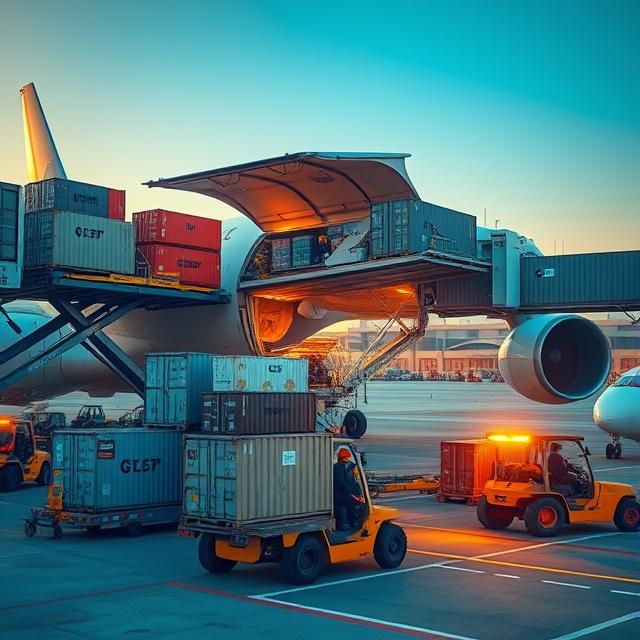
Example outcome: a mid-sized electronics exporter reduces docking delays by 30% and gets credit for earlier inventory turns — directly improving cash flow.
4. How digital freight platforms actually work — step by step
- Shipment request / quote: shipper enters commodity, dimensions, origin/destination and required delivery window. Platform queries carriers and responds with instant priced options.
- Booking & contract: once selected, the booking is confirmed digitally; a provisional slot is held at the port/airline.
- Documentation prep: e-B/L, commercial invoice, packing list, and any certificates are pre-filled by parsing saved templates and submitted to customs APIs for pre-clearance.
- Cargo execution: carriers and local agents pick up containers/trucks; IoT sensors are activated for temperature-sensitive loads.
- Visibility & exception management: live ETA feeds and sensor alerts are pushed to all stakeholders; the platform recommends reroutes when delays occur.
- Arrival & hand-off: digital release documents are sent to the consignee; final delivery is scheduled via the platform.
- Post-shipment analytics: costs, carbon footprint, and SLA adherence are logged for reporting.
The power is in automation: what took days and multiple phone calls is now event-driven, auditable and (crucially) measurable.
5. Technology stack — what to expect under the hood
Top platforms in 2025 combine the following:
- APIs & integrations (carriers, port community systems, customs).
- Machine learning models for demand forecasting, dynamic pricing, ETA prediction.
- IoT & telematics for real-time condition monitoring.
- Blockchain (optional) for tamper-proof documentation and provenance.
- Cloud-native microservices for scale and resilience.
- Role-based dashboards for shippers, agents, carriers, customs and finance teams.
When you evaluate platforms, ask for demonstrable integrations in key corridors (Dubai → Mombasa, Dubai → Lagos, Dubai → Rotterdam) and examples of ML-driven decisions used in live operations.
6. Picking the right platform — practical checklist
Here’s a pragmatic checklist shaped by real-world needs:
- Route coverage for your lanes — Does it support your origin/destination pairs, and has it proven capacity in those corridors?
- Real-time tracking accuracy — Are ETAs backed by both carrier and satellite/IOT feeds?
- Document automation & customs integration — Can it pre-clear shipments with Dubai Customs or partner authorities?
- Multi-modal orchestration — Can it combine sea, air and road legs into a single view with booking control?
- Data ownership & security — Who owns the transactional data? What encryption and SOC certifications are in place?
- Local support & network — Is there a Dubai-based team or partner who understands local rules and exceptions?
- SLA and accountability — What are refund or penalty terms when ETAs fail?
- Sustainability reporting — Does it compute CO₂ per shipment and support green routing options?

A platform that checks these boxes materially reduces operational risk.
7. Cost & ROI — what businesses should expect
Adoption economics vary with volume and sophistication. Typical elements:
- Subscription / SaaS fees for access to the marketplace and dashboards.
- Transaction fees per booking or per container.
- Integration costs (one-time) for ERP or TMS hookups.
- Value adds (analytics, insurance, carbon credits) as optional revenue streams.
Return on investment commonly appears in:
- Lower dwell and demurrage costs,
- Higher container utilisation,
- Fewer customs fines,
- Faster inventory turns.
Smart adopters often see payback within 6–12 months when volume and route complexity justify automation.
8. Risk & mitigation — realistic caveats
Digital platforms reduce many risks, but introduce others:
- Data fragmentation if partners use incompatible formats. → Mitigation: insist on standards (UN/EDIFACT, JSON API) and a middleware layer.
- Cybersecurity exposure due to shared APIs. → Mitigation: require strong auth (OAuth2), encryption, penetration test reports.
- Over-reliance on algorithmic defaults that may miss local nuances. → Mitigation: maintain human-in-the-loop controls and local operations teams.
- Regulatory variability across destination countries. → Mitigation: choose platforms with robust customs partnerships and legal coverage.
Good platforms embed exception workflows and local partners to address these.
9. Trust-building — review vignettes and real results (non-promotional)
Below are short, realistic vignettes showing typical outcomes companies experience when switching to a mature digital freight platform backed by a reliable Dubai operator.
Vignette 1 — Retail importer (Dubai → Lagos)
Problem: Frequent port congestion and long customs queues caused stockouts.
Result: After moving to a platform that pre-submits customs data and reserves weekly feeder slots, the importer reduced port dwell time by 38% and cut stockout incidents by half.
Client note: “Visibility meant our planners could react earlier — we saw a direct reduction in lost sales.” — Logistics Manager, regional retail chain.
Vignette 2 — Vehicle exporter (Dubai → Accra)
Problem: Paper documentation delays and mismatch in Ro-Ro scheduling.
Result: Digital booking + e-B/L flow eliminated a 72-hour average paperwork delay; schedule adherence improved and insurance claims due to administrative error fell 80%.
Client note: “The platform removed the paperwork bottleneck and gave us live visibility during shipment.” — Export Manager, vehicle logistics.
Vignette 3 — Pharma shipper (Dubai → EU)
Problem: Temperature excursions and lack of chain-of-custody records.
Result: IoT-enabled containers with cloud dashboards allowed instant exception alerts and automated corrective actions; spoilage dropped to near zero.
Client note: “The system’s alerts let us stop a temperature excursion before it ruined the load.” — Quality Head, pharma trading house.

These are examples of the kind of measurable trust outcomes shippers report after platform adoption.
10. Why tethering to a Dubai-based partner matters
Selecting a platform is not just about software — it’s about execution in the real world. Dubai partners provide:
- Local customs knowledge: familiarity with Trade Single Window rules, free zone regulations and port protocols.
- On-ground operator network: agents, trucking partners, and terminal contacts across the Gulf.
- Regulatory & payment facilitation: bridging banking, escrow and letter-of-credit flows across jurisdictions.
- Regional customer service: immediate SLA response for time-critical shipments.
This is why global platforms often partner with or white-label local forwarders to deliver end-to-end service — the software plus the boots-on-ground.
11. Nautical Gulf — a natural choice for platform-powered freight from Dubai
When a shipper needs both digital capability and reliable on-ground execution, a Dubai-based logistics partner that blends platform access with local expertise becomes invaluable.
Why Nautical Gulf fits that role (review-style rationale):
- Local anchoring: Nautical Gulf operates from Dubai and maintains relationships with major terminals and customs brokers, enabling fast exception handling.
- Platform integration: they adopt platform workflows (bookings, e-docs, tracking) and offer shippers a single-pane dashboard with localised support.
- Multimodal reach: from full-container loads and Ro-Ro to air charter and door delivery, Nautical Gulf orchestrates multimodal legs with platform automation.
- Transparency & reviews: multiple shippers have recorded lower dwell times and better cost predictability after migrating to platform-enabled services via Nautical Gulf.
- Sustainability options: they can activate green routing and carbon reporting features that many platforms now offer.
A practical way to evaluate any platform partnership is to look for precisely this combination: technical capability + local operational muscle. For many Dubai-based shippers, Nautical Gulf represents that blend.
12. Implementation roadmap — how to transition in 90 days
Phase 0 — Discovery (Week 0–2): map lanes, current costs (freight, demurrage, admin), and KPIs (lead time, fill rate).
Phase 1 — Pilot (Weeks 3–6): run 10–20 shipments on the platform on a priority lane; connect one ERP/TMS feed.
Phase 2 — Scale (Weeks 7–10): expand to other lanes, onboard local partners (truckers, terminal agents), enable IoT tracking on high-value loads.
Phase 3 — Optimise (Weeks 11–13): review AI recommendations, tune allocation rules, start sustainability reporting and monthly analytics.
Outcome targets: 20–35% reduction in average lead time, 15–25% fewer documentation errors, measurable reduction in demurrage spend.
13. Sustainability & reporting — platforms as enablers
Platforms bring consistent carbon accounting into shipping decisions. They can:
- Estimate CO₂ per booking and compare route alternatives.
- Offer green carrier or low-carbon sailing options.
- Integrate carbon credit or offset purchases into checkout flows.
- Generate compliance-ready reports for buyers and regulators.
For buyers demanding ESG proof, platform-level reporting closes the transparency gap — and Dubai partners can help validate claims with local port metrics.

14. Regulatory considerations — customs and cross-border data
Platforms that win in Dubai integrate neatly with trade authorities. Look for:
- Trade Single Window connectivity for UAE pre-clearance.
- Customs broker API links for destination countries (e.g., Kenya, Nigeria, UK).
- Document validation features that reduce human rejections.
- Audit logs for traceability in disputes or compliance audits.
These features turn the platform into both a tool and a legal record — an advantage in contested claims or regulatory reviews.
15. The future — what to expect 2026–2029
- Greater platform interoperability — cross-platform freight exchange networks enabling dynamic capacity trading.
- Increased use of blockchain for end-to-end provenance and financing.
- AI-assisted freight financing — instant credit for shippers based on platform history.
- More vertical-specialised platforms (automotive, pharma, perishables) with tailored SLA and sensors.
- Platform-driven green corridors that guarantee lower-carbon options end-to-end.
Dubai will remain a test-bed and a launch-pad for these innovations.
Conclusion — move from friction to flow
Digital freight platforms are not a novelty; they are the operational spine of modern trade. In Dubai — with its advanced ports, single-window trade infrastructure and regional commerce — platforms unlock speed, transparency and sustainability at scale.
For shippers that want both cutting-edge platform features and reliable, local execution, pairing platform capabilities with an experienced Dubai operator is the pragmatic path. Partners who combine technology, local domain knowledge, and trust help convert platform promise into measurable business outcomes.
If your priorities are reliable execution, local support, and platform-grade automation from Dubai, consider anchoring your digital freight strategy with a partner that brings all three together — a partner like Nautical Gulf — to ensure that your shipments don’t just move, they move smartly, safely, and sustainably.




Leave a Comment