
Table of Contents
How Middle East Geopolitics Is Affecting Shipping Routes & Freight Costs — What Dubai Businesses Must Know
Global shipping has entered a new era where politics directly influences logistics. For businesses relying on international cargo, freight forwarding is no longer just about distance and price — it’s about geopolitical intelligence.
Dubai sits at the center of global maritime trade. When political tension shifts shipping routes or increases freight costs, Dubai is one of the first logistics hubs to feel the ripple effect.
Understanding these changes isn’t optional anymore. It’s a competitive advantage.
This article explains what’s happening, why shipping costs fluctuate, and how smart logistics companies like Nautical Gulf adapt to protect businesses.
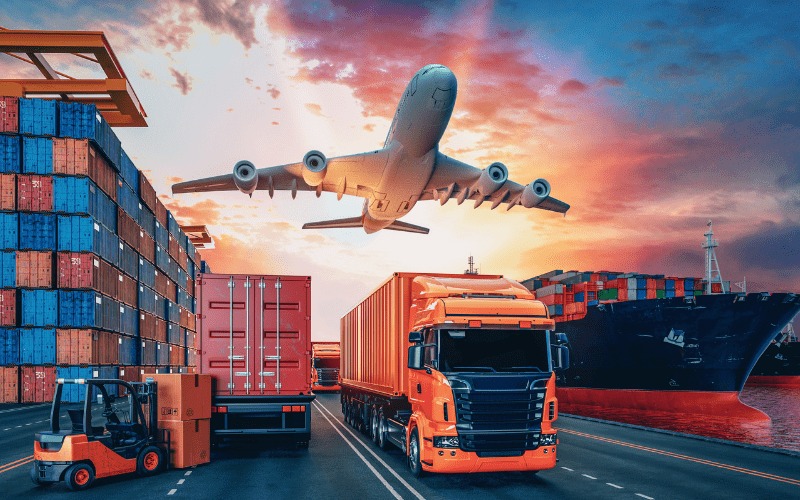
Why Geopolitics Now Controls Global Shipping
Modern shipping lanes pass through politically sensitive regions:
- Red Sea
- Strait of Hormuz
- Suez Canal
- Gulf of Aden
- Eastern Mediterranean
Any disruption in these corridors affects:
✔ Transit times
✔ Insurance premiums
✔ Fuel costs
✔ Port congestion
✔ Container availability
✔ Freight rates
When routes become unstable, vessels reroute. Rerouting adds thousands of kilometers, increases fuel burn, and reduces global shipping capacity.
Less capacity = higher freight prices.
This is why freight markets react faster to political news than many financial markets.
The Red Sea Effect on Dubai Freight
The Red Sea is one of the most important maritime shortcuts connecting Asia and Europe.
When carriers avoid this route due to regional tension:
- Ships reroute around Africa
- Transit time increases 10–15 days
- Operating costs rise sharply
- Insurance risk premiums increase
- Container cycles slow down
Dubai, as a major transshipment hub, absorbs both the pressure and opportunity.
Some routes become expensive. Others become strategic alternatives.
This is where logistics intelligence matters more than shipping speed.
Freight Costs Are No Longer Static
Historically, freight pricing followed predictable cycles.
Today, geopolitical events create rapid fluctuations.
Factors driving modern freight volatility:
1. War-risk insurance premiums
Cargo passing sensitive zones carries extra insurance costs.
2. Fuel price instability
Political tension often affects energy markets.
3. Port congestion
Rerouted ships overload alternative ports.
4. Container imbalance
Equipment gets stuck in unexpected regions.
5. Emergency rerouting
Ships must change course mid-journey.
These variables can change shipping costs within days.
Businesses that rely on outdated freight planning lose money fast.
Why Dubai Remains a Strategic Logistics Advantage
Despite volatility, Dubai remains one of the safest logistics anchors globally.
Reasons:
- Advanced port infrastructure (Jebel Ali)
- High cargo handling capacity
- Political stability relative to surrounding regions
- Strong customs systems
- Global airline cargo networks
- Free zone trade benefits
Dubai doesn’t stop shipping during crises — it adapts.
This adaptability attracts global freight companies and international traders.
How Smart Shipping Companies Adapt to Political Risk
A professional shipping company doesn’t wait for disruption.
It predicts disruption.
At Nautical Gulf, freight planning includes geopolitical monitoring as part of operations.
That means:
✔ Alternate route mapping
✔ Multi-port contingency plans
✔ Insurance optimization
✔ Flexible vessel scheduling
✔ Predictive cost forecasting
✔ Early customs documentation
✔ Cargo risk profiling
Shipping is no longer reactive.
It’s engineered.
Case Insight: Rerouting Cargo Without Cost Shock
During a recent Red Sea disruption, a Dubai electronics importer faced a major problem:
Their cargo risked a 14-day delay and rising freight rates.
Nautical Gulf responded by:
- Shifting shipment to a hybrid sea-air route
- Using Dubai as a rebalancing hub
- Locking in insurance before premiums spiked
- Pre-clearing customs paperwork
- Splitting cargo into optimized loads
Result:
✔ Delivery delay reduced to 3 days
✔ Cost increase contained to 8% instead of 40% market spike
✔ Zero cargo damage
✔ Client maintained retail launch schedule
This is what geopolitical logistics management looks like in practice.
What Businesses Should Learn From Current Shipping Trends
Companies that treat freight as a basic expense are exposed to risk.
Modern logistics is strategic infrastructure.
Ask your shipping partner:
- How do you handle route disruption?
- What happens if a corridor closes?
- How fast can you reroute cargo?
- Are insurance rates locked early?
- Do you forecast freight volatility?
- Is my shipment protected from political risk?
If the answer is vague, your cargo is vulnerable.
The Rise of Intelligence-Driven Logistics
The future of freight belongs to companies that combine:
Shipping expertise + geopolitical awareness + predictive planning.
Dubai’s logistics sector is evolving toward data-driven operations:
- AI cargo forecasting
- Smart route modeling
- Risk simulation
- Real-time tracking ecosystems
- Insurance analytics
- Trade compliance automation
This transforms shipping from transport into logistics engineering.
Why Nautical Gulf Focuses on Risk-Controlled Shipping
At Nautical Gulf, the philosophy is simple:
Every shipment must be predictable — even in unpredictable conditions.
That requires:
- Anticipation over reaction
- Engineering over improvisation
- Transparency over guesswork
- Strategy over shortcuts
Geopolitical volatility isn’t a barrier.
It’s a logistics challenge that can be managed with expertise.
And businesses that partner with smart freight operators gain stability while competitors face uncertainty.
Conclusion: Shipping in a Political World Requires Smarter Partners
Global trade will never return to a “stable” era. Politics and logistics are now permanently connected.
Businesses shipping through Dubai must work with partners who understand not just cargo — but global risk.
The companies that adapt fastest will control cost, protect timelines, and outperform competitors.
Shipping today is not just movement.
It’s strategy.

Navigate Global Shipping With Confidence
If your business depends on international cargo, don’t let geopolitical volatility control your costs or timelines.
Work with a logistics partner that predicts disruption before it happens.
Nautical Gulf provides strategic freight planning, vehicle shipping, and international cargo services built for modern global trade.
Smart logistics isn’t luck — it’s engineered.

Leave a Comment