
Table of Contents
How does freight forwarding work in Dubai?
Dubai is not merely a destination; it is the “Central Nervous System” of global commerce. For any business looking to move goods between the East and the West, understanding how freight forwarding works in this emirate is the difference between a high-margin success and a logistical bottleneck.
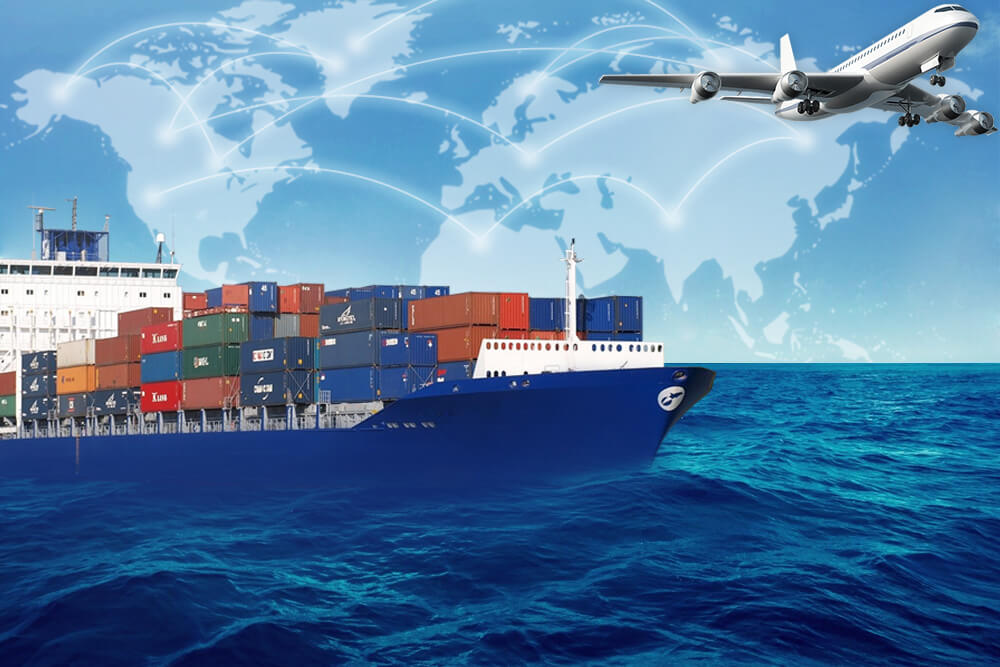
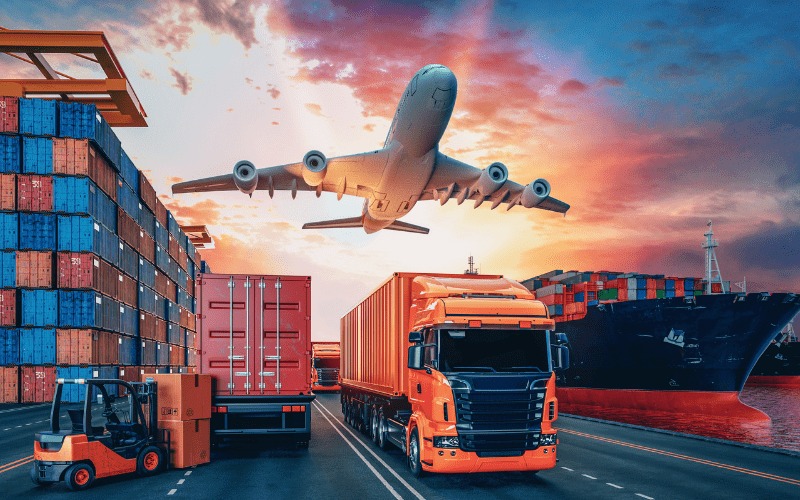
At its core, freight forwarding in Dubai leverages the city’s unique “tri-modal” connectivity—sea, air, and land—anchored by the massive Jebel Ali Port and Al Maktoum International Airport. In 2026, this process has become highly digitized, yet it still relies heavily on the “Last Mile” expertise of local strategists who navigate the nuances of UAE customs and free zone regulations.
Whether you are importing high-value electronics into the Dubai South district or exporting industrial machinery from the Jebel Ali Free Zone (JAFZA), the freight forwarder acts as your architect. They don’t just move boxes; they design a journey that minimizes taxes, maximizes speed, and ensures compliance with the UAE’s Federal Tax Authority (FTA).
What is Freight Forwarding in Dubai?
Snippet-Ready Definition: Freight forwarding in Dubai is a specialized service where a third-party agent (the forwarder) coordinates the end-to-end movement of cargo between the UAE and global destinations. Unlike a carrier who owns the ships or planes, a Dubai freight forwarder manages the logistics, documentation, insurance, and customs clearance—specifically utilizing the city’s free zone infrastructure to optimize trade costs.
Why This Matters to Global Business & High-Value Cargo
For international operators and vessel managers, Dubai’s freight forwarding ecosystem is a strategic asset. In a region where “Time is Money,” having a forwarder who understands the “Bayan” (Dubai Customs) system is vital.
For those in the maritime sector, such as vessel operators calling at Port Rashid or Jebel Ali, freight forwarding is the bridge that allows for “Spares in Transit.” This specialized process allows critical engine parts to be flown into DXB airport and delivered directly to a ship at the pier without being subjected to standard import duties.
How Freight Forwarding Works in Dubai: A Step-by-Step Breakdown
The mechanics of moving cargo through the UAE follow a precise technical sequence:
- Requisition and Quote (The Planning Phase): The process begins with a detailed “Cargo Profile.” The forwarder evaluates dimensions, weight, and “HS Codes” (Harmonized System) to determine the most cost-effective route—be it Sea, Air, or a Multimodal “Sea-Air” combination.
- Documentation and Compliance: In Dubai, the forwarder prepares the “Bill of Lading” (for sea) or “Air Waybill.” They ensure the commercial invoice and packing list align with Dubai Customs requirements to prevent “Red Channel” inspections.
- The “First Mile” (Origin Pick-up): The cargo is collected from the supplier and transported to a consolidation warehouse. In Dubai, many forwarders utilize warehouses in JAFZA to keep cargo in a “Bonded” status.
- Customs Entry (The “Bayan” System): The forwarder files a digital entry through the Dubai Trade portal. For re-exports, they utilize “Standing Guarantees” to avoid paying the 5% import duty upfront.
- International Transit: The cargo is loaded onto a vessel at Jebel Ali or a plane at DWC. The forwarder monitors the “Milestones” in real-time.
- The “Final Mile” (Destination Delivery): Upon arrival, the forwarder coordinates the de-vanning of the container and handles local trucking to the final warehouse or vessel.
Types of Freight Forwarding Services in the UAE
1. Sea Freight (LCL vs. FCL)
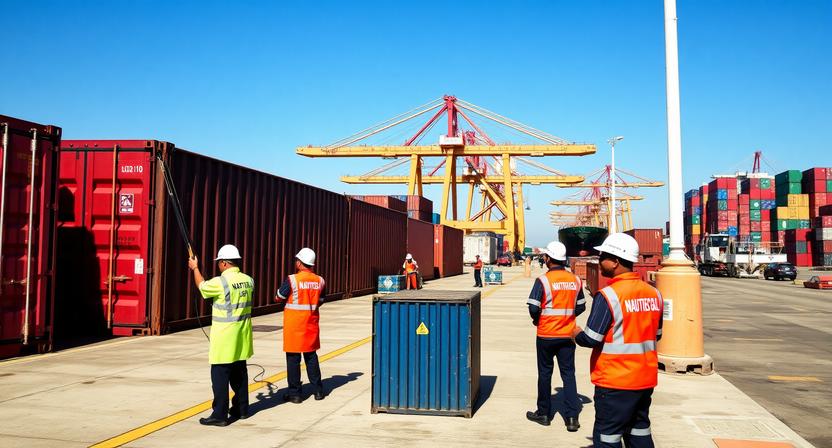
Dubai’s Jebel Ali Port handles over 14 million TEUs annually. Forwarders offer “Less than Container Load” (LCL) for smaller shipments and “Full Container Load” (FCL) for bulk movements.
2. Air Freight (Express vs. General)
Utilizing Dubai International (DXB) for speed or Al Maktoum (DWC) for high-volume logistics. This is the preferred method for “Technical Spares” and perishables.
3. Sea-Air Multimodal
A unique Dubai specialty. Cargo arrives by sea from Asia, is cleared in JAFZA, and flown out of DWC to Europe. This cuts transit time by 50% compared to sea, at a fraction of the cost of pure air freight.
Advantages of Using a Dubai-Based Forwarder
- Tax Efficiency: Expert forwarders utilize the UAE’s VAT-exempt zones for international transshipments.
- Speed of Clearance: With 24/7 customs operations, a Dubai forwarder can often clear cargo in under 4 hours.
- Global Connectivity: Access to over 150 shipping lines and 200+ air destinations from a single hub.
Common Misconceptions and Pitfalls
“The Forwarder Owns the Ships”
Many businesses mistakenly believe forwarders are ship owners. In reality, forwarders are “Asset-Light” architects. Their value is in their contracts and relationships with carriers, allowing them to secure better rates than a single business could.
“Cheaper is Always Better”
In Dubai, the lowest quote often ignores “Terminal Handling Charges” or “Documentation Fees” at the destination. An experienced strategist looks for a “Landed Cost” quote rather than a “Port-to-Port” rate.
Real-World Example: The “AOG” (Aircraft on Ground) Scenario
Imagine a cargo vessel berthed in Jebel Ali with a critical engine failure. Every hour at the berth costs $2,500 in port fees and lost charter revenue.
A Dubai freight forwarder like Nautical Gulf receives the “Urgent” request for a replacement turbocharger from Europe. The forwarder doesn’t just book a flight; they coordinate an “Airside Pick-up” at DWC, clear the “Spares in Transit” paperwork in minutes, and have a specialized “Hi-Ab” truck waiting at the airport to deliver the part directly to the vessel’s crane. This is freight forwarding as an emergency response.
FAQs: Freight Forwarding in Dubai
1. Do I need a local trade license to use a freight forwarder in Dubai? For “Door-to-Door” imports into the UAE mainland, you need a local license. However, for “Transshipments” or “Free Zone to Free Zone” movements, you can often use the forwarder’s license.
2. What is JAFZA’s role in freight forwarding? JAFZA (Jebel Ali Free Zone) allows forwarders to store cargo duty-free and VAT-free, making it the ideal hub for re-exporting goods to Africa or the CIS region.
3. How much are customs duties in Dubai? Standard customs duty is 5% of the CIF (Cost, Insurance, Freight) value, but many items are exempt when handled through a professional forwarder.
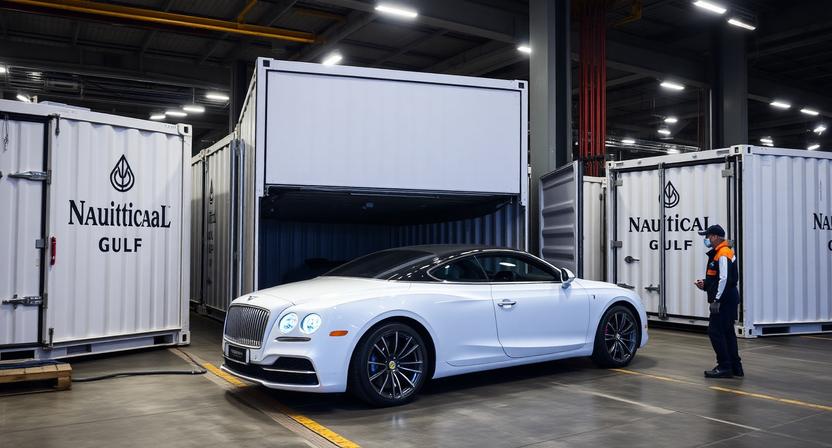
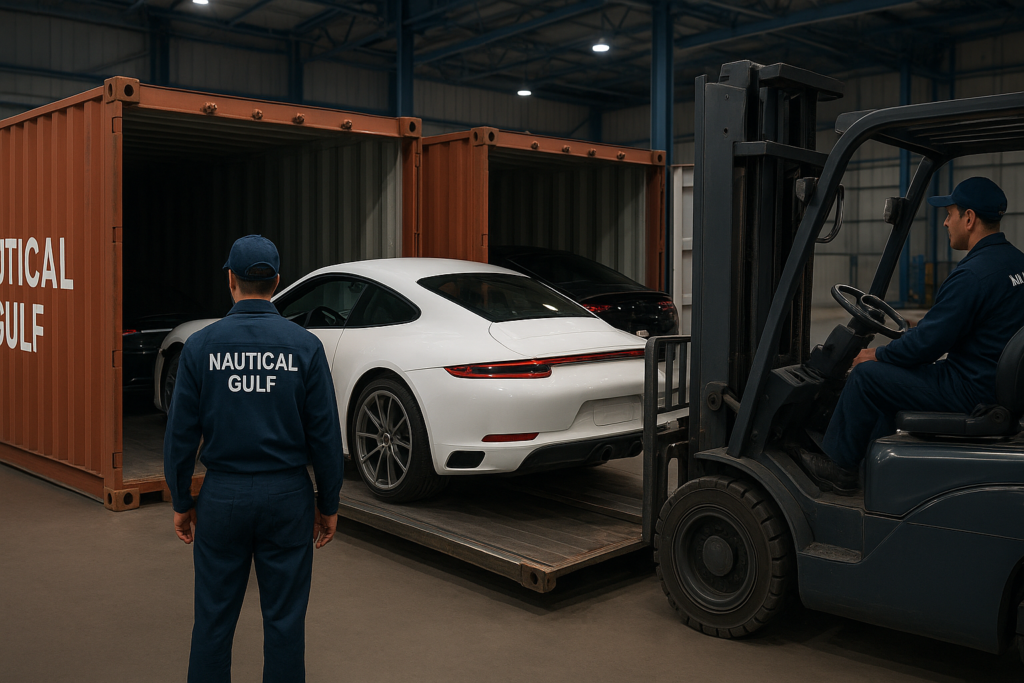
4. Can a forwarder handle car shipping? Yes, Dubai is a major hub for vehicle logistics, including Ro-Ro (Roll-on/Roll-off) and containerized car shipping.
5. What is the “Bayan” system? It is the digital customs portal used in Dubai to file declarations and track cargo status in real-time.
6. How long does it take for sea freight from China to Dubai? Typically 18 to 25 days, depending on the shipping line and the number of port calls.
7. Is insurance included in freight forwarding? No, “Marine Cargo Insurance” is a separate add-on. Strategists always recommend it, as carrier liability is extremely limited.
8. Can I ship hazardous materials (HazMat) through Dubai? Yes, but it requires specialized “DGD” (Dangerous Goods Declaration) and approval from the Port Authority.
Conclusion: Orchestrating Your Supply Chain
Freight forwarding in Dubai is the silent engine of the global economy. It is a sophisticated dance of documentation, digital portals, and physical movement. By choosing a partner who understands the strategic importance of Jebel Ali and the UAE’s free zone perks, you transform a cost center into a competitive advantage.
As the maritime world shifts towards “Just-in-Time” logistics, the role of the Dubai forwarder as a strategist becomes even more critical.
Ready to optimize your cargo movement through the Middle East? Would you like me to analyze your current shipping routes or provide a tailored quote for your next Jebel Ali port call?

Leave a Comment