

Table of Contents
How much is it to import a car to Ghana?
Navigating the Costs of Vehicle Importation to Ghana
If you are planning to move a vehicle to West Africa, the question “How much is it to import a car to Ghana?” is often met with complex answers. In the world of maritime logistics, the total price is a composite of three distinct financial layers: the ocean freight from your origin (like Dubai or the UK), the mandatory Ghana Revenue Authority (GRA) customs duties, and the local terminal handling charges at Tema or Takoradi ports.
For a standard sedan, you can expect total costs to range from $3,500 to $7,000, while luxury SUVs or high-capacity trucks can easily exceed $12,000 in total landing costs. In 2026, Ghana’s “Integrated Customs Management System” (ICUMS) has made the process more transparent, but the introduction of age-based penalties and carbon emission taxes means that older vehicles are significantly more expensive to clear than newer models.
As a strategist, I advise clients that the “cheapest” car to buy abroad isn’t always the cheapest to land. Success lies in calculating the Landed Cost—the price of the car plus every cent spent until the keys are in your hand in Accra.

What is Vehicle Importation to Ghana?
Snippet-Ready Definition: Importing a car to Ghana is the legal process of transporting a foreign-purchased vehicle into the country via a sea port (usually Tema). The process requires formal customs declaration through the ICUMS portal, payment of varied taxes (including Import Duty, VAT, and NHIL), and compliance with the Ghana Standards Authority regarding vehicle age and safety.
Why This Matters to Luxury Shippers and Businesses
For high-net-worth individuals and corporate fleets, importing a car to Ghana is a strategic investment in mobility. Ghana’s road infrastructure in hubs like Accra and Kumasi has seen significant upgrades, increasing the demand for luxury SUVs and reliable commercial vehicles.
- Asset Protection: Moving a luxury asset into Ghana requires a shipping partner who understands “Blocked and Braced” containerization. In the humid transit across the Atlantic or from the Gulf, improper packing leads to salt-air corrosion.
- Corporate Scalability: For logistics firms, importing specialized trucks is the backbone of their operation. Understanding the tax exemptions available for certain commercial sectors can save a business thousands in capital expenditure.
- Resale Value: A well-documented, legally imported car with all duties paid carries a significant premium in the Ghanaian secondary market compared to vehicles with “irregular” paperwork.
How It Works: The Cost Breakdown
Calculating the total cost involves a specific four-step mechanical process. Here is how the numbers stack up in 2026:
- Ocean Freight and Insurance (CIF): The base of all taxes is the CIF value (Cost of the car + Insurance + Freight). Shipping a car from Dubai to Tema via RORO (Roll-on/Roll-off) typically costs $1,200 – $1,800, while a dedicated container costs $2,500 – $4,000.
- The Customs Duty (5% to 20%): Ghana applies a duty based on the vehicle’s engine capacity (CC) and purpose. Most passenger cars attract a 20% import duty on the CIF value.
- Supplementary Taxes and Levies: This is where the “hidden” costs reside. You must account for:
- VAT (15%)
- National Health Insurance Levy (NHIL – 2.5%)
- GETFund (2.5%)
- AU & ECOWAS Levies (0.7%)
- Examination & Processing Fees
- The Age Penalty (Over-age Law): Ghana discourages the importation of old cars. Vehicles older than 10 years attract a graduated “Over-age Penalty.” For example, a car 12-15 years old can see a penalty ranging from 5% to 50% of the CIF value.

Variations: RORO vs. Container Shipping
The method you choose significantly impacts both the cost and the safety of the vehicle.
- RORO (Roll-on/Roll-off): The car is driven onto a specialized vessel. It is the most economical method.
- Best for: Standard used cars and heavy machinery.
- Risk: Higher exposure to “pilferage” (theft of small items like mirrors or knobs).
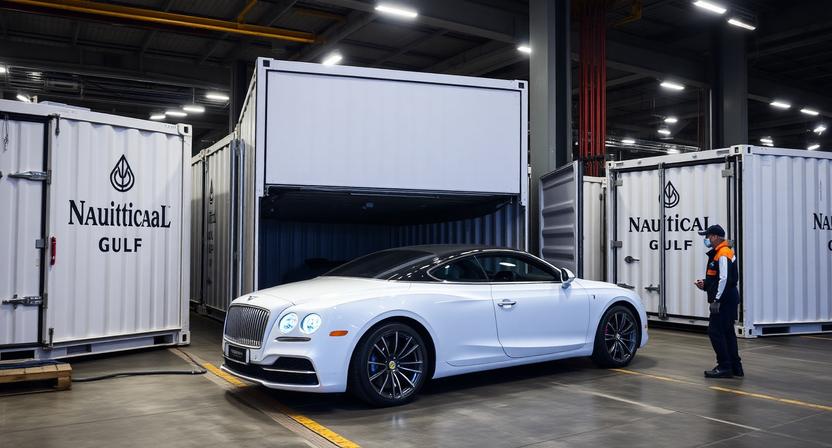
- Container Shipping: The car is lashed inside a 20ft or 40ft steel box.
- Best for: Luxury cars, EVs, or shipping a car filled with personal effects.
- Cost: Approximately 40% more expensive than RORO, but offers total security.
Advantages of Professional Logistics Planning
Using an experienced strategist for Ghana imports offers three main benefits:
- Accurate Valuation: We use the GRA “Home Delivery Value” (HDV) database to give you an exact duty estimate before you buy the car.
- Demurrage Avoidance: Tema port is busy. If your paperwork isn’t ready 48 hours before the ship docks, you will pay “storage fees” of $50-$100 per day.
- Compliance: Ensuring the VIN (Vehicle Identification Number) matches all documents prevents the vehicle from being impounded for suspected “salvage” title issues.
Common Misconceptions and Pitfalls
- The “Invoice Value” Trap: Many importers believe that if they buy a car for $1,000, they will be taxed on $1,000. False. Ghana Customs uses their own internal valuation (HDV) for the car’s model and year, regardless of what you paid.
- Shipping Personal Goods in RORO: You cannot put personal items in a car shipped via RORO. They will likely be stolen or confiscated. Only container shipments allow for “extra” cargo.
- Right-Hand Drive Cars: It is illegal to import Right-Hand Drive (RHD) vehicles into Ghana. They will be seized at the port unless you have a specific, rare permit for a specialized vehicle.
Real-World Scenario: The SUV Strategy
In 2025, a client shipped a 2021 Toyota Land Cruiser from Dubai to Tema. The purchase price was $55,000.
- Shipping: $2,800 (Container)
- Duty & Taxes: Approx. $16,500
- Clearing Agent & Port Fees: $1,200
- Total Landed Cost: $75,500.
The client initially expected to pay only $5,000 in duty. By providing an upfront strategic audit, we prevented a cash-flow crisis at the port, allowing for a seamless transition from the dock to the driveway.
FAQs
1. Can I import a car older than 10 years to Ghana? Yes, but you will pay a significant “Over-age Penalty.” Vehicles older than 10 years are heavily taxed; those older than 15 years face even steeper fines.
2. How long does it take to ship a car from Dubai to Tema? Typically, the transit time is 25 to 35 days, depending on the shipping line and transshipment hubs.
3. What documents do I need for Ghana customs? You need the Original Bill of Lading, the car’s Original Title/Logbook, a Commercial Invoice, and your Ghana Card/TIN.
4. Do I need a clearing agent in Ghana? Yes. You cannot clear a vehicle yourself in Ghana. You must use a licensed Customs House Agent (CHA) who has access to the ICUMS system.
5. Are electric vehicles (EVs) cheaper to import? Ghana has introduced incentives for EVs, including lower import duties in some categories to encourage green energy.
6. What is ICUMS? ICUMS is the “Integrated Customs Management System,” the digital platform used for all trade facilitation and tax payments at Ghana’s borders.
7. Can I drive my car from the port immediately? No. After duty is paid, the car must be registered with the DVLA (Driver and Vehicle Licensing Authority) to receive Ghanaian license plates.
8. Is insurance mandatory during shipping? It is highly recommended. For approximately 1% of the car’s value, “Marine Insurance” protects you against total loss or damage during the voyage.
Conclusion: Driving with Confidence
Importing a car to Ghana is a journey of precision. While the taxes may seem high, the value of having a reliable, high-quality vehicle in West Africa is unmatched. The key to a successful import is preparation: know your HDV, choose the right shipping mode, and always ensure your paperwork is lodged in the ICUMS system before the vessel passes the Meridian.

Leave a Comment