
Table of Contents
Navigating the Transatlantic Bridge: Importing Cars From USA to Dubai
The automotive pipeline between the United States and Dubai is one of the most active maritime corridors in the world. For collectors, expatriates, and commercial dealerships, importing cars from USA to Dubai represents a strategic opportunity to access high-spec vehicles, classic American muscle, or cost-effective salvaged units.
However, moving a 2-ton machine across 7,000 miles of ocean is not a task for the uninitiated. It requires a synergy of international maritime law, stringent UAE customs protocols, and “last-mile” logistical precision. As maritime strategists, we view this process not just as transport, but as a multi-stage technical operation.
Dubai has established itself as a global automotive sanctuary, offering world-class infrastructure to support the import, modification, and maintenance of American-spec vehicles. This guide strips away the complexity to provide a practical roadmap for your vehicle’s journey from the US coast to the sands of the Emirates.
Why Dubai is the Ultimate Destination for American Imports
A High-Performance Marine & Port Culture
Dubai’s identity is inextricably linked to its ports. Jebel Ali Port, the largest man-made harbor in the world, serves as the primary gateway for vehicle imports. The port’s dedicated Ro-Ro (Roll-on/Roll-off) terminals are designed for high-volume efficiency, ensuring that vehicles are discharged and moved to bonded warehouses with minimal risk of transit damage.
The Scenery of Automotive Diversity
Dubai is one of the few places on earth where a classic 1960s Mustang can comfortably share the road with a 2026 Tesla or a heavy-duty Ford F-150. The city’s infrastructure—broad highways and high-tech service centers—is perfectly suited for American-spec vehicles, which often feature larger engines and left-hand drive configurations identical to the UAE standard.
Strategic Re-Export Hub
Many choose to import cars to Dubai not just for local use, but to leverage Dubai’s status as a re-export hub. The Dubai South and JAFZA free zones allow for vehicles to be stored, modified, and then shipped to markets in Africa, Central Asia, or the wider GCC without incurring local customs duties twice.
The Best Time for Shipping: Seasonal Logistics
While global shipping operates year-round, timing your import can impact both cost and vehicle safety.
The Winter Window (October to March)
This is the “Golden Season” for vehicle shipping. The weather in Dubai is temperate, which is crucial during the de-vanning (unloading) process. Extreme heat can affect specialized paint jobs or sensitive electronics if vehicles sit on a quay for extended periods. Furthermore, sea conditions in the North Atlantic are generally more predictable during late autumn before the peak winter storms.
Avoiding the “Summer Heat” Peak
If you are importing high-value or classic cars, be wary of the peak UAE summer (June to August). While containers provide protection, the ambient heat at the port can reach 50°C. Strategists recommend opting for air-conditioned storage or “Consolidated Container Shipping” during these months to ensure the vehicle’s interior and seals remain intact.
Recommended Shipping “Itineraries” & Methods
When importing cars from USA to Dubai, you essentially have three primary logistical routes:
1. The Ro-Ro Method (Roll-on/Roll-off)
Vehicles are driven onto specialized ships. This is the most cost-effective method for standard SUVs and sedans.
- Pros: Lowest cost; high frequency of sailings from East Coast ports (Savannah, Newark).
- Cons: Vehicle is exposed to the elements during loading; cannot contain personal items.
2. Shared Container Load (Consolidation)
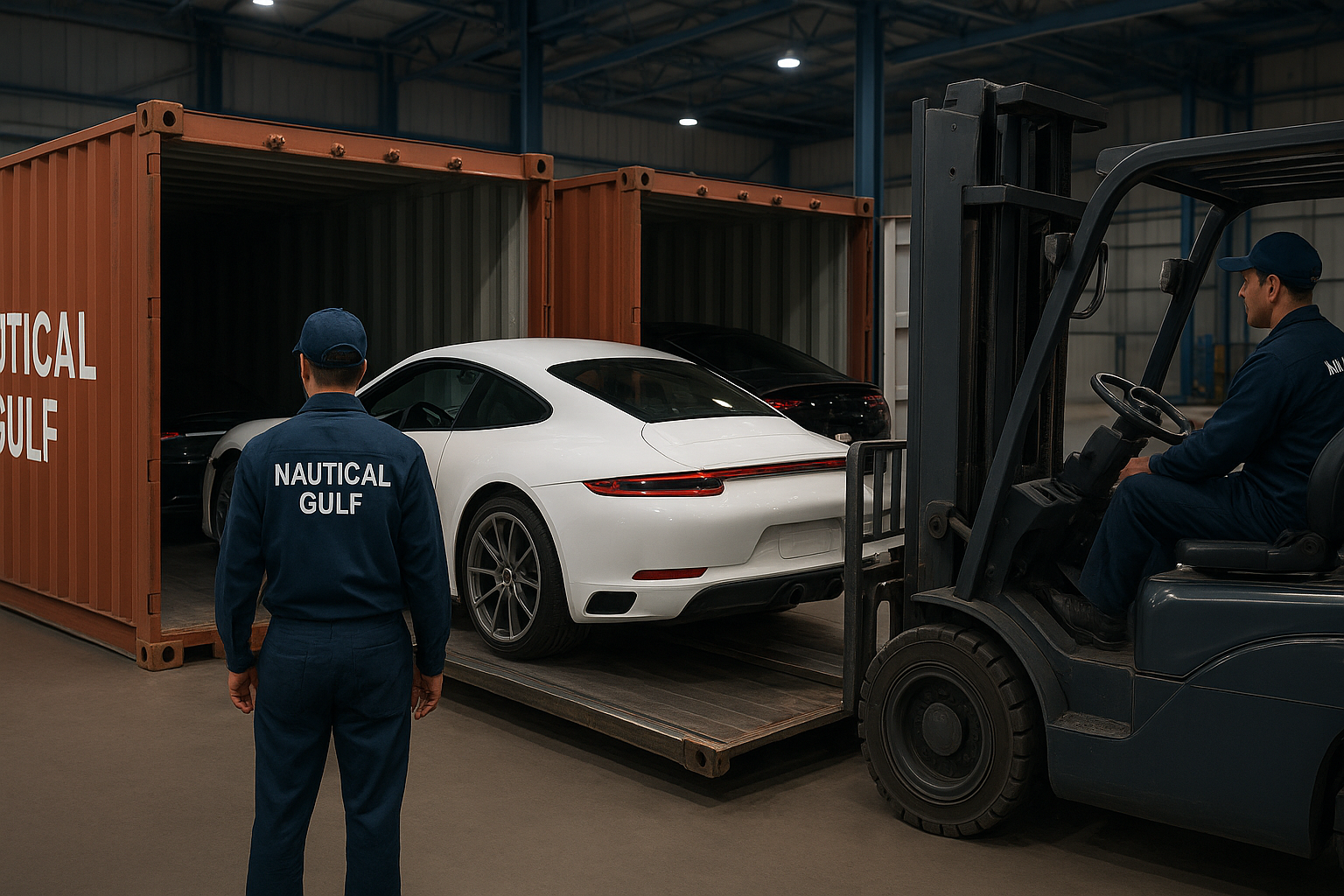
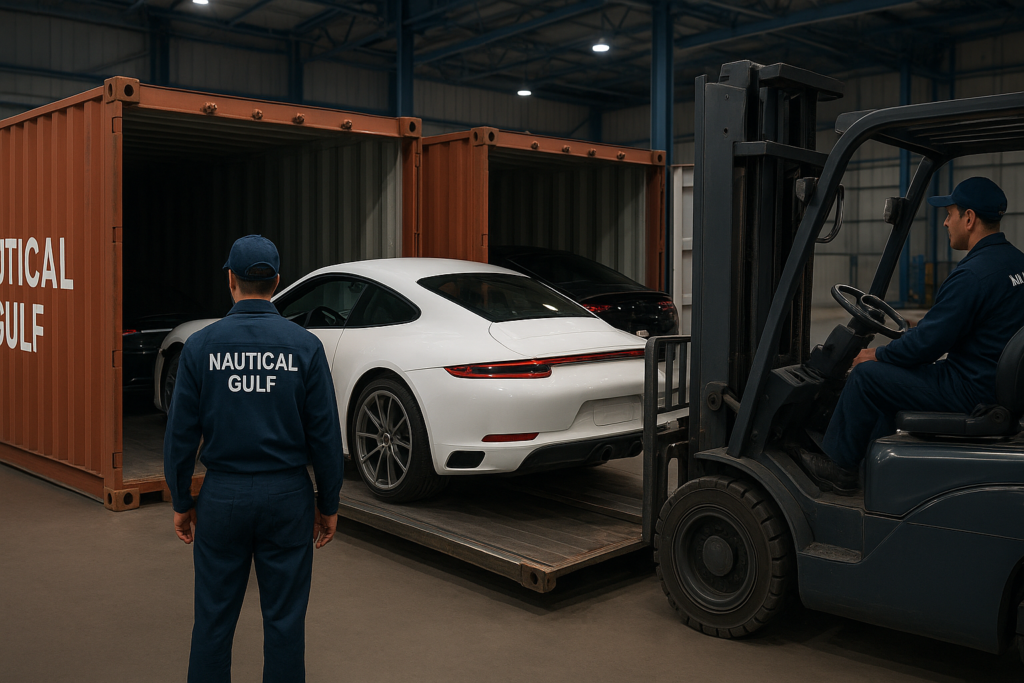
Your car is secured in a 40ft container alongside one or two other vehicles heading to Dubai.
- Pros: High safety; protected from sea spray and salt.
- Cons: The container only ships when full, which can lead to slight delays at the US port.
3. Dedicated 20ft Container
The “First-Class” of car shipping. Your vehicle occupies its own sealed container.
- Pros: Absolute security; ability to ship spare parts or personal effects with the car.
- Cons: Most expensive sea freight option.
Local Logistics, Weather, and Sea Conditions
From US Ports to Jebel Ali
Most vehicles depart from Newark, Savannah, Houston, or Los Angeles. The transit time typically ranges from 35 to 50 days. Sea conditions in the Mediterranean and the Red Sea are usually stable, but a strategist will always account for potential congestion at the Suez Canal, which can add 7–10 days to the ETA.
The Last Mile: Port to Showroom
Once the vessel berths at Jebel Ali, the “Last Mile” begins. This involves clearing Dubai Customs, paying the 5% import duty and 5% VAT, and transporting the vehicle via recovery truck to a testing center. Driving an unregistered, non-GCC spec car on Dubai roads is strictly prohibited; hence, recovery logistics are a mandatory part of the budget.
Importing a car from the USA to Dubai involves sea freight (Ro-Ro or Container), followed by a mandatory UAE Customs clearance where a 5% duty is applied. The vehicle must then pass a VASI (Vehicle Agency Services) or Tasjeel test to ensure it meets UAE safety and emissions standards before registration with the RTA.
Safety & Local Regulations: The Compliance Checklist
Dubai’s Roads and Transport Authority (RTA) has clear standards. You cannot simply “plug and play” a US car in the UAE without checking these boxes:
- LHD Requirement: Only Left-Hand Drive (LHD) vehicles can be registered for road use in the UAE.
- The 10-Year Rule: While classic cars can be imported, standard vehicles older than 10 years may face stricter scrutiny or higher registration hurdles unless they are classified as “Classic” by the Automobile & Touring Club of the UAE (ATCUAE).
- Non-GCC Spec Modifications: US cars are built for different climates. You may need to upgrade your cooling system (radiator/thermostat) to handle the UAE’s extreme heat.
- Clean Title Only: Dubai Customs and the RTA have become increasingly strict regarding “Junk” or “Non-Repairable” titles. Ensure your US car has a “Clean” or “Salvage” title that is certifiably repairable.

Pricing Guidance: Cost Expectations in 2026
Importing a vehicle is an investment. Here is a breakdown of the typical costs you should anticipate:
| Cost Element | Estimated Range (USD) | Remarks |
| Ocean Freight (USA to Dubai) | $1,200 – $2,800 | Depends on port of origin and method (Ro-Ro vs Container). |
| Marine Insurance | 1.5% – 2.5% | Based on the declared value of the vehicle. |
| UAE Customs Duty | 5% of CIF Value | CIF = Cost + Insurance + Freight. |
| VAT | 5% of Total | Applicable on the landed value of the car. |
| Port Handling & Unloading | $400 – $700 | Standard charges at Jebel Ali Port. |
| RTA Testing & Registration | $250 – $500 | Includes plates and inspection fees. |
FAQs: Importing Vehicles from USA to UAE
1. Can I import a car with a Salvage Title to Dubai?
Yes, but it must be repaired and pass a rigorous RTA safety test. You cannot register a car labeled as “Junk” or “Crush.”
2. How much does it cost to ship a car from Los Angeles to Dubai?
Typically between $2,000 and $3,000 for a container, as the transit time is longer than from the East Coast.
3. Do I need to pay VAT if I am an expat moving to Dubai?
Yes, unlike some countries, the UAE generally applies 5% VAT on the value of imported vehicles regardless of ownership duration.
4. How do I get my car from Jebel Ali to my house?
You must hire a “Recovery Truck” (flatbed). A reputable logistics provider like Nautical Gulf can coordinate this as part of a door-to-door service.
5. Are US navigation systems compatible with Dubai?
Usually, no. You will likely need to visit a specialist in Dubai to re-flash the infotainment system with GCC maps.
6. What documents do I need from the USA?
The original Title, Bill of Sale, and a copy of your US Export Declaration.
7. Can I ship personal items inside my car?
Only if you use a “Dedicated Container.” In Ro-Ro shipping, the car must be empty of all personal belongings.
8. Is it worth importing a car or buying locally?
For luxury, classic, or highly specific American models, importing is often cheaper. For standard daily drivers, the local GCC market is usually more practical.

Final Decision: Making the Strategic Move
Importing cars from USA to Dubai is a rewarding venture if managed with foresight. The key is to partner with a logistics firm that understands both the US export laws and the intricacies of the Jebel Ali customs gate.
At Nautical Gulf, we provide the strategic bridge you need. We don’t just ship cars; we manage the transition of your asset into the UAE’s unique automotive ecosystem.
Ready to start your import?
[Contact Nautical Gulf’s Automotive Logistics Team] for a customized quote and compliance check today.



Leave a Comment